School of Computer Science Engineering & Technology
Building the next generation of innovators, developers, and tech leaders.
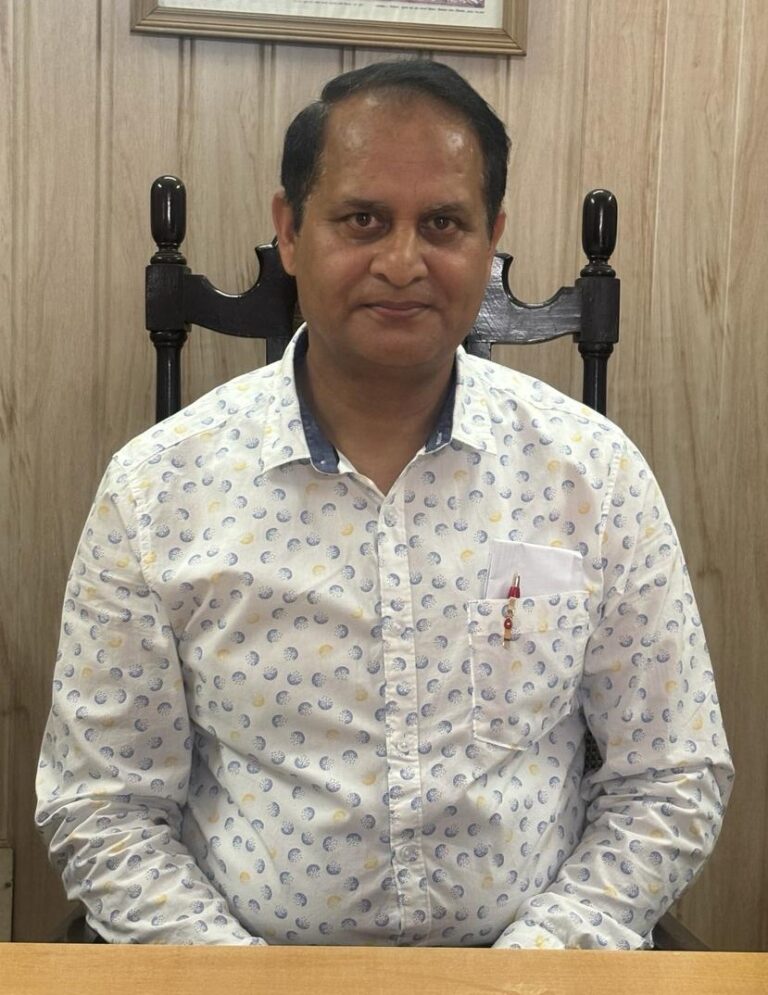
Prof. Rakesh Pathania
Principal, GC Dharamshala
From the Principal's Desk
I extend a warm welcome to all in Government College Dharamshala, one of the most prestigious colleges of Himachal Pradesh. This college was established in 1926 and is on the verge of completing its successful journey of a hundred years. It is my proud privilege to serve the oldest college of the state as Principal.
It is a matter of happiness and pride that this college is accredited by NAAC with a B++ grade. The college is offering many graduate, post-graduate, and professional self-financing courses to the students. This college has excellent infrastructure, committed staff, and students from far-flung areas. Many committees, clubs, and units are constituted for the benefit and welfare of the students and the smooth functioning of the institution.
Dear students, this is the era of tough competition. You should increase your knowledge day by day. Make the best use of the library in the college as it has thousands of books, newspapers, magazines, and journals. There is no shortcut to success. Hard work is the only key to success and practice makes a man perfect.
Overuse and misuse of mobile phones, T.V., and the internet cause distraction, health hazards, and wastage of precious time. Instead, take part in sports and extra-curricular activities to groom up a healthy and balanced personality. In a true sense, education means acquiring sound knowledge and attaining strong values of life to be refined human beings and responsible citizens.
May God bless you all!
My best wishes to each one associated with Government College Dharamshala.
Prof. Rakesh Pathania
Principal
Government College Dharamshala, District Kangra HP
Our Commitments & Methodology
We emphasize contemporary knowledge, professional skill development, and student-driven learning to prepare you for the demanding business and tech world.
Interactive Learning
Focus on interactive lectures, case analysis, role play, business simulations, games, assignments, and quiz competitions.
Computer Based Training
Regular practical training provided by subject experts using the latest software, hardware resources, and multimedia setups.
Expert Lectures
Frequent lectures and interactive sessions by eminent personalities and academicians from renowned institutions and industry.
Project Assignments
Specific project work including live industrial projects and practical assignments to develop true workmanship.
Educational Tours
Annual educational and industrial tours organized to make students aware of the changing scenarios in the industrial sector.
Culture & Lifestyle
A blend of activities nurturing independence, self-discipline, and energy to build your drive for self-initiative and results.
Code of Conduct & General Rules
- The decision of the Principal in all matters will be final and binding.
- Students must be seated before the start of the lecture. No entry is allowed 5 minutes after the class starts.
- Regular attendance in classes and guest lectures is compulsory. Name will be struck-off if a candidate absents continuously for six days.
- Use of mobile phones is strictly prohibited in the college premises.
- Misbehavior, persistent disobedience, consumption of drugs/liquor, or cheating may invite strict disciplinary action including expulsion.
- Each student is expected to observe the college dress code strictly. Boys must have properly trimmed beards; girls must keep hair in proper order.
- No student is permitted to undertake any part-time/whole-time job during the course of study.
- Food, breweries, and drinks are not permitted in the labs or classrooms.
- Students must not leave the campus during teaching hours without prior permission.
- Every student must always carry their duly completed identity card.
RAGGING IS A COGNIZABLE OFFENCE
...Any act of Ragging would not go unnoticed and unpunished...
Ragging of all kinds is strictly banned in the college campus. Anyone indulging in ragging is likely to be punished appropriately. Punishments include imprisonment, fine, expulsion from the institution, or suspension from classes/hostel.
1800 - 180 - 5522
B.Tech in Computer Science & Engineering
To create motivated, innovative, and creative-thinking graduates capable of filling ICT positions across sectors. Our students are trained to conceptualize, design, analyze, and develop applications to meet modern-day requirements.
The School of Computer Science and Engineering at Govt. College Dharamshala offers a four-year B.Tech (CSE) degree spread over eight semesters. This course is affiliated to Himachal Pradesh Technical University (HPTU) Hamirpur and is approved by the All India Council for Technical Education (AICTE), New Delhi.
The department provides industrial visits, training, seminars, and workshops on the latest software technologies. We boast a well-qualified faculty per AICTE norms and a dedicated career guidance and placement cell working efficiently to place students in leading MNCs.
Our Vision
To contribute to the state and India through excellence in scientific and technical education and research, serving as a valuable resource for Industry and Society. We are committed to creating conditions that enable all students to experience an educational journey that is intellectually, socially, and personally transformative.
Our Mission
- Provide the best technical education to generate new knowledge in rural areas.
- Develop the personality, talent, and employability skills of students.
- Increase self-confidence and leadership quality.
- Develop a positive attitude, good ethics, and social values.
- Foster team spirit to achieve organizational goals.
Overall Programme Objectives
Technical Foundations
Understanding computing at different levels including OOPS, Cloud Computing, IoT circuits, architecture, OS, and algorithms.
Problem Solving
Ability to adapt established models, techniques, and algorithms for efficiently solving new problems and designing computer-based systems.
Professional Growth
Function effectively in teams, communicate effectively, understand ethical responsibilities, and engage in life-long learning.
Research & Entrepreneurship
Undertake small research tasks and projects, with the ability to take an idea and develop it into a business plan for an entrepreneurial venture.
Societal Impact
An understanding of the impact of technological solutions in an economic, societal, and environmental context.
Admission Criteria & Eligibility
Eligibility: The candidate must have passed 10+2 or its equivalent examination from a recognized Board with Physics and Mathematics as compulsory subjects, securing at least 45% marks (40% for reserved categories).
Basis of Admission
- First 50% Seats: Based on merit/rank/score obtained in the current JEE (Main).
- Remaining 50% Seats: Filled on the basis of merit in the current year HPCET.
- Vacant Seats: If seats remain vacant after exhausting JEE (Main) and HPCET merit, they will be filled based on 10+2 examination merit.
Schedule of Fines (in Rs.)
| Violation | Fine Amount (Rs.) |
|---|---|
| Absence fine for a period | 05.00 |
| Absence fine for a practical | 05.00 |
| Absence fine for Tutorial Classes | 10.00 |
| Absence fine for Class Tests | 10.00 |
| Absence fine for House Exam | 100.00 |
| Fine for delay in returning library book (per day) | 02.00 |
| Fine for not wearing Dress Code in college | 100.00 |
| Without Identity Card | 10.00 |
| Mobile Phone fine in Deptt./Lab/Class Room | Strict Disciplinary Action |
Dress code (gray pant, light blue striped shirt, navy blue coat, striped blue tie, formal black shoes/belt) is compulsory for B.Tech (CSE) students except on Thursdays.
Required Documents
Ensure the following documents are attached with your application form and ready for checking before submission.
1. Application Form
- Online Application Form (Students may upload on spot in the CSE department)
2. Attested Copies of Certificates
- Matriculation (10th)
- Plus Two (10+2)
- Graduation (If applicable)
- Proof of JEE/HPCET score
- Counselling letter from HPTU, Hamirpur
3. Original / Photocopy Certificates
- Certificate of Caste / Tribe / Antyodaya / IRDP
- Income Certificate (If parents' income is < Rs. 5000/month)
- Certificate for Physically Handicapped (if applicable)
- Bonafide Himachali Certificate
- Character Certificate in Original
- Affidavit of gap year (if any)
Teaching Methodology
We emphasize contemporary knowledge, professional skill development, and student-driven learning to prepare you for the demanding business and tech world.
Interactive Learning
Focus on interactive lectures, case analysis, role play, business simulations, games, assignments, and quiz competitions.
Computer Based Training
Regular practical training provided by subject experts using the latest software, hardware resources, and multimedia setups.
Expert Lectures
Frequent lectures and interactive sessions by eminent personalities and academicians from renowned institutions and industry.
Project Assignments
Specific project work including live industrial projects and practical assignments to develop true workmanship.
Educational Tours
Annual educational and industrial tours organized to make students aware of the changing scenarios in the industrial sector.
Culture & Lifestyle
A blend of activities nurturing independence, self-discipline, and energy to build your drive for self-initiative and results.
Course Outline
Comprehensive breakdown of theoretical subjects, practical labs, and major projects required for the B.Tech (CSE) degree.
| Sr. No. | Category | Code | Subject Title | L | T | P | Credits | IA | ESE | Total |
|---|---|---|---|---|---|---|---|---|---|---|
| Theory Subjects | ||||||||||
| 1 | FC | PHY-111 | Applied Physics | 3 | 1 | 0 | 4 | 40 | 60 | 100 |
| 2 | FC | HS-111 | Communication Skills | 3 | 0 | 0 | 3 | 40 | 60 | 100 |
| 3 | FC | EE-111 | Basic Electrical Engineering | 3 | 1 | 0 | 4 | 40 | 60 | 100 |
| 4 | FC | MA-111 | Applied Mathematics-I | 3 | 1 | 0 | 4 | 40 | 60 | 100 |
| 5 | MC | EVS-111 | Energy and Environment | 2 | 1 | 0 | 3 | 40 | 60 | 100 |
| Practical / Labs | ||||||||||
| 1 | FC | PHY-111P | Applied Physics Lab | 0 | 0 | 2 | 1 | 30 | 20 | 50 |
| 2 | FC | HS-111P | Communication Skills Lab | 0 | 0 | 2 | 1 | 30 | 20 | 50 |
| 3 | FC | EE-111P | Basic Electrical Engineering Lab | 0 | 0 | 2 | 1 | 30 | 20 | 50 |
| 4 | FC | WXX-111P | Workshop | 0 | 0 | 4 | 2 | 30 | 20 | 50 |
| Total | 14 | 04 | 10 | 23 | 700 | |||||
| Sr. No. | Category | Code | Subject Title | L | T | P | Credits | IA | ESE | Total |
|---|---|---|---|---|---|---|---|---|---|---|
| Theory Subjects | ||||||||||
| 1 | FC | CHM-111 | Applied Chemistry | 3 | 1 | 0 | 4 | 40 | 60 | 100 |
| 2 | FC | CS-111 | Computer Programming | 3 | 0 | 0 | 3 | 40 | 60 | 100 |
| 3 | FC | EC-111 | Basic Electronics Engineering | 3 | 1 | 0 | 4 | 40 | 60 | 100 |
| 4 | FC | MA-121 | Applied Mathematics-II | 3 | 1 | 0 | 4 | 40 | 60 | 100 |
| 5 | MC | UHV-111 | Universal Human Values and Awareness About HP | 3 | 0 | 0 | 3 | 40 | 60 | 100 |
| Practical / Labs | ||||||||||
| 1 | FC | CHM-111P | Applied Chemistry Lab | 0 | 0 | 2 | 1 | 30 | 20 | 50 |
| 2 | FC | CS-111P | Computer Programming Lab | 0 | 0 | 2 | 1 | 30 | 20 | 50 |
| 3 | FC | EC-111P | Basic Electronics Engineering Lab | 0 | 0 | 2 | 1 | 30 | 20 | 50 |
| 4 | FC | ME-111P | Engineering Graphics and Design | 0 | 0 | 4 | 2 | 30 | 20 | 50 |
| 5 | MC | HS-122P | Holistic Health and Yoga | 0 | 0 | 2 | 1 | 30 | 20 | 50 |
| Total | 15 | 03 | 12 | 24 | Total Marks | 750 | ||||
| S.No. | Category | Code | Subject Title | L | T | P | Credits | IA | ESE | Total |
|---|---|---|---|---|---|---|---|---|---|---|
| Theory Subjects | ||||||||||
| 1 | BS | MAFC-311 | Probability Theory and Statistics | 3 | 1 | 0 | 4 | 40 | 60 | 100 |
| 2 | PC | CSPC-311 | Data Structure and Algorithms | 3 | 1 | 0 | 4 | 40 | 60 | 100 |
| 3 | PC | CSPC-312 | Python Programming | 2 | 0 | 0 | 2 | 40 | 60 | 100 |
| 4 | PC | CSPC-313 | Computer Organization and Architecture | 3 | 1 | 0 | 4 | 40 | 60 | 100 |
| 5 | PC | ECEPC-312 | Digital System Design | 3 | 0 | 0 | 3 | 40 | 60 | 100 |
| 6 | HS | IKS-311 | Indian Knowledge System | 2 | 0 | 0 | 2 | 40 | 60 | 100 |
| 7 | HS | HS-311 | Engineering Economics | 2 | 0 | 0 | 2 | 40 | 60 | 100 |
| Practical / Labs | ||||||||||
| 1 | PC | CSPC-311P | Data Structure and Algorithms Lab | 0 | 0 | 2 | 1 | 30 | 20 | 50 |
| 2 | PC | CSPC-312P | Python Programming Lab | 0 | 0 | 2 | 1 | 30 | 20 | 50 |
| 3 | PC | ECEPC-312P | Digital System Design Lab | 0 | 0 | 2 | 1 | 30 | 20 | 50 |
| S.No. | Category | Code | Subject Title | L | T | P | Credits | IA | ESE | Total |
|---|---|---|---|---|---|---|---|---|---|---|
| Theory Subjects | ||||||||||
| 1 | PC | CSPC-411 | Discrete Mathematics | 3 | 0 | 0 | 3 | 40 | 60 | 100 |
| 2 | PC | CSPC-412 | Operating System | 3 | 1 | 0 | 4 | 40 | 60 | 100 |
| 3 | PC | CSPC-413 | Design and Analysis of Algorithm | 3 | 1 | 0 | 4 | 40 | 60 | 100 |
| 4 | PC | CSPC-414 | Artificial Intelligence in Engineering | 3 | 0 | 0 | 3 | 40 | 60 | 100 |
| 5 | PC | CSPC-415 | Database Management System | 3 | 1 | 0 | 4 | 40 | 60 | 100 |
| 6 | PC | ECEPC-412 | Microcontrollers | 3 | 0 | 0 | 3 | 40 | 60 | 100 |
| Practical / Labs | ||||||||||
| 1 | PC | CSPC-413P | DAA Lab | 0 | 0 | 2 | 1 | 30 | 20 | 50 |
| 2 | PC | CSPC-414P | AI Lab | 0 | 0 | 2 | 1 | 30 | 20 | 50 |
| 3 | PC | CSPC-415P | DBMS Lab | 0 | 0 | 2 | 1 | 30 | 20 | 50 |
| Exit Option | ||||||||||
| 1 | INT | CSE-416P | Internship-I (Exit Option) | - | - | - | 6 | 30 | 20 | 50 |
| S.No. | Category | Code | Subject Title | L | T | P | Credits | IA | ESE | Total |
|---|---|---|---|---|---|---|---|---|---|---|
| Theory Subjects | ||||||||||
| 1 | PC | CSPC-511 | Computer Networks | 3 | 1 | 0 | 4 | 40 | 60 | 100 |
| 2 | PC | CSPC-512 | Theory of Computation | 3 | 1 | 0 | 4 | 40 | 60 | 100 |
| 3 | PC | CSPC-513 | Intro to Machine Learning | 3 | 1 | 0 | 4 | 40 | 60 | 100 |
| 4 | PC | CSPC-514 | Software Engineering | 3 | 0 | 0 | 3 | 40 | 60 | 100 |
| 5 | PC | CSPC-515 | Data Warehouse & Mining | 3 | 0 | 0 | 3 | 40 | 60 | 100 |
| Practical / Labs | ||||||||||
| 1 | PC | CSPC-511P | Computer Networks Lab | 0 | 0 | 2 | 1 | 30 | 20 | 50 |
| 2 | PC | CSPC-513P | Machine Learning Lab | 0 | 0 | 2 | 1 | 30 | 20 | 50 |
| S.No. | Category | Code | Subject Title | L | T | P | Credits | IA | ESE | Total |
|---|---|---|---|---|---|---|---|---|---|---|
| Theory Subjects | ||||||||||
| 1 | PC | CSPC-613 | Compiler Design | 3 | 1 | 0 | 4 | 40 | 60 | 100 |
| 2 | PC | CSPC-614 | Computer Graphics | 3 | 0 | 0 | 3 | 40 | 60 | 100 |
| 3 | PE | CSPE-611 | Internet of Things | 3 | 0 | 0 | 3 | 40 | 60 | 100 |
| 4 | PE | CSPE-612 | Advanced Computer Network | 3 | 0 | 0 | 3 | 40 | 60 | 100 |
| 5 | HS | SIE-611 | Start-Up, Innovation and Entrepreneurship | 2 | 0 | 2 | 3 | 50 | 50 | 100 |
| Practical / Labs | ||||||||||
| 1 | PC | CSPC-613P | Compiler Design Lab | 0 | 0 | 2 | 1 | 30 | 20 | 50 |
| 2 | PC | CSPC-614P | Computer Graphics Lab | 0 | 0 | 2 | 1 | 30 | 20 | 50 |
| 3 | EE | CSEE-611P | Capstone Project-I | 0 | 0 | 4 | 2 | 60 | 40 | 100 |
| B.Sc. Degree Exit Option | ||||||||||
| 1 | EE | CSEE-613P | Internship-II (Exit) | - | - | - | 6 | 50 | 50 | 100 |
| S.No. | Category | Code | Subject Title | L | T | P | Credits | IA | ESE | Total |
|---|---|---|---|---|---|---|---|---|---|---|
| Theory Subjects | ||||||||||
| 1 | PC | CSPC-711 | Cloud Computing* | 3 | 1 | 0 | 4 | 40 | 60 | 100 |
| 2 | PC | CSPC-712 | Natural Language Processing** | 3 | 1 | 0 | 4 | 40 | 60 | 100 |
| 3 | OE | CSOE-711x | Open Elective-I | 3 | 0 | 0 | 3 | 40 | 60 | 100 |
| 4 | PE | CSPE-711x | Professional Elective-III | 3 | 0 | 0 | 3 | 40 | 60 | 100 |
| 5 | PE | CSPE-712x | Professional Elective-IV | 3 | 0 | 0 | 3 | 40 | 60 | 100 |
| Labs & Projects | ||||||||||
| 1 | EE | CSEE-711P | Seminar | 0 | 0 | 2 | 1 | 50 | 50 | 100 |
| 2 | EE | CSEE-712P | Major Project-I | 0 | 0 | 6 | 3 | 60 | 40 | 100 |
| 3 | EE | CSEE-713P | Internship Presentation | 0 | 0 | 0 | 2 | 50 | 50 | 100 |
| S.No. | Category | Code | Subject Title | L | T | P | Credits | IA | ESE | Total |
|---|---|---|---|---|---|---|---|---|---|---|
| 1 | EE | CSEE-811P | Major Project-II (Prototype & Testing) | 0 | 0 | 24 | 12 | 300 | 200 | 500 |
| OR | ||||||||||
| 2 | EE | CSEE-812P | Industrial Project/Internship OR Research Project | 0 | 0 | 24 | 12 | 300 | 200 | 500 |
Our Esteemed Faculty
Experienced academicians and subject matter experts dedicated to shaping the theoretical foundation and technical skills of our B.Tech students.
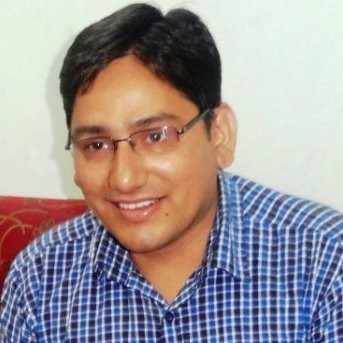
Dr. Pawan Thakur
HOD B.Tech(CSE)
Ph.D(CSE), M.Phil(CS), M.Tech(CSE) Cloud Computing Certification- IIT Patna
FACULTY
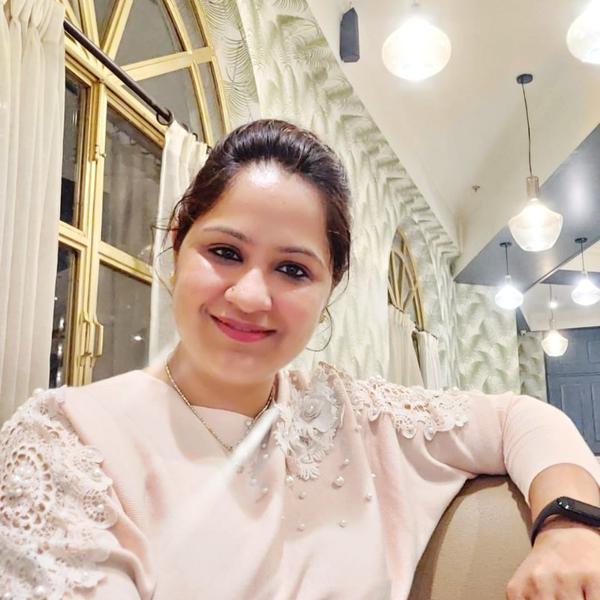
Dr. Shweta Gupta
Assistant Professor
M.Sc, B.Ed, P.G.D.C.A, M.Phil, Ph.D ( Maths)
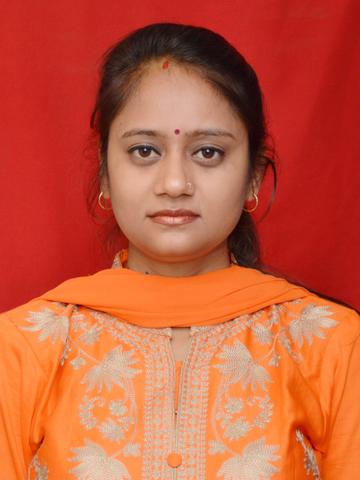
Sunita Dhiman
Assistance Professor
Pursuing P.hd(CS) , M.Tech(CSE) , B.Tech(CSE)
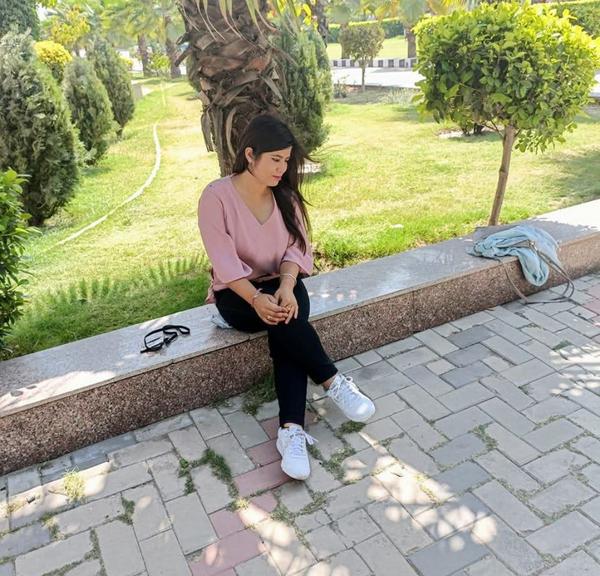
Divya Verma
Assistant Professor
M.Tech (CSE)

Kanika
Assistant Professor
MCA (UGC-NET)
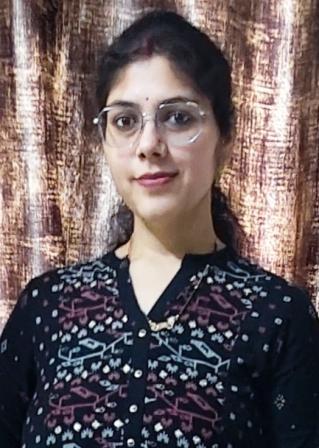
Neha Verma
Assistant Professor
Persuing Ph.D (CSE), MCA
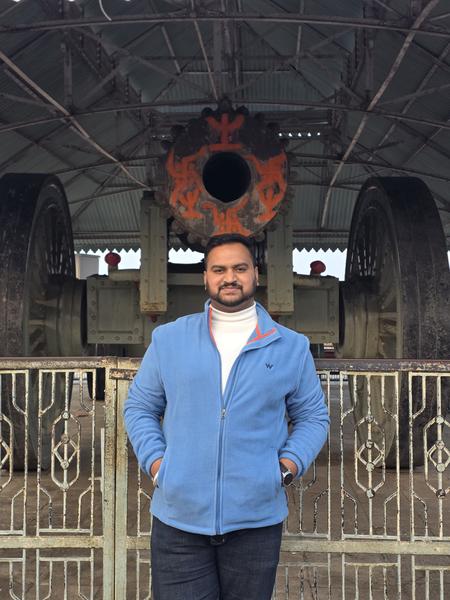
Harsh Guelria
Assistant Professor
Post Graduation English NET Qualified
Our Initiatives & Legacy
At SCSET, education extends beyond the classroom. Discover how our student body transformed ideas into action, establishing formal clubs, and hosting state-level technical events.
The Brainova '26 Legacy
Brainova isn't just an event; it is a testament to student execution. From the ground up, every aspect of this massive hackathon was powered by the SCSET community.
- Technical Mentorship: Seniors preparing juniors for RapidSolve.
- Logistics: Managing registrations and real-time operations.
- Digital Hub: Building the event portals and live leaderboards.
Conquering Hackathon
Our commitment to technical excellence extends beyond campus. SCSET students recently secured a massive victory at the prestigious HIET Hackathon, proving our coding standards on a state level.
Current Club Leadership
What started as an unorganized group of enthusiasts has evolved into a structured hierarchy. Reach out to our specialized club heads to get involved.
Vanshika Rana
Club CoordinatorSatyam Sharma
Coding & ProjectMinakshi Jagota
Placement CellLakshita
Cultural ClubSapriha
Media ClubPHY-111: Applied Physics
| Teaching Scheme | Credits | Marks Distribution | ||||
|---|---|---|---|---|---|---|
| L | T | P | Internal | End Sem | Total | |
| 3 | 1 | 0 | 4 | 40 (Min: 16) | 60 (Min: 24) | 100 |
Course Contents:
Laser: Characteristics of lasers, Spontaneous and stimulated emission of radiation Einstein's coefficients, Population inversion, Ruby laser, Helium -Neon lasers & Semiconductor Lasers Applications of laser in industry, Scientific and medical fields.
Fiber Optics: Fundamental ideas about optical fiber, Propagation mechanism, Acceptance angle and acceptance cone, Numerical aperture, Propagation Mechanism and communication in fiber, Single and Multi-Mode Fibers, Step index and Graded index fiber, Attenuation and losses, Applications of optical fibers.
X-rays: X-rays production, hard and soft x-rays, Continuous and characteristics x-rays, Bremsstrahlung effect
Superconductivity: Introduction and discovery of superconductivity, Meissner effect, Type-I and type-IIP superconductors, Isotope effect, BCS theory (qualitative), High temperature superconductors, Applications of superconductivity.
Textbooks:
- Engineering Physics - H.K Malik & A.K Singh
- Quantum Mechanics - Ajoy Ghatak
HS-111: Communication Skills
| Teaching Scheme | Credits | Marks Distribution | ||||
|---|---|---|---|---|---|---|
| L | T | P | Internal | End Sem | Total | |
| 3 | 0 | 0 | 3 | 40 (Min: 16) | 60 (Min: 24) | 100 |
Course Contents:
Recommended Textbooks:
- Communication Skills - Sanjay Kumar & Pushp Lata (Oxford University Press)
- Effective Communication and Soft Skills - Nitin Bhatnagar
- Business Correspondence and Report Writing - R.C. Sharma & Krishna Mohan
EE-111: Basic Electrical Engineering
| Teaching Scheme | Credits | Marks Distribution | ||||
|---|---|---|---|---|---|---|
| L | T | P | Internal | End Sem | Total | |
| 3 | 1 | 0 | 4 | 40 (Min: 16) | 60 (Min: 24) | 100 |
COURSE CONTENTS:
Network Theorems: Superposition, Thevenin‘s, Norton‘s, Maximum power transfer, Millman‘s, and Reciprocity theorems. Transient response of series RL and RC circuits.
Electromagnetism: Induction, Dot convention, Magnetic circuits, Iron Losses, Fringing and stacking, Solenoids and relays.
Motors & Generators: DC motor principles, torque relationships, conversion efficiency. DC generator principles, EMF and speed relationship.
Textbooks:
- Fundamentals of Electrical Engineering - Ashfaq Husain
- Basic Electrical Engineering - Nagrath & Kothari
- Engineering Circuit Analysis - Hayt and Kimberly
MA-111: Applied Mathematics-I
| Teaching Scheme | Credits | Marks Distribution | ||||
|---|---|---|---|---|---|---|
| L | T | P | Internal | End Sem | Total | |
| 3 | 1 | 0 | 4 | 40 (Min: 16) | 60 (Min: 24) | 100 |
Course Contents:
Vectors & Matrices: Vector space, subspaces, basis and dimension, Linear dependence & Independence of vectors, rank-nullity theorem, Eigen values, Eigen vectors, diagonalization. Cayley Hamilton Theorem (without proof), quadratic & canonical forms.
Multivariable Calculus: Functions of several variables, Limits and continuity, partial derivatives, total derivative, Euler ‘s theorem, Jacobian, maxima and minima, Lagrange ‘s method of multipliers, Taylor ‘s & Maclaurin‘s Theorem.
Applications: Applications of double integrals to areas and volumes, evaluation of triple integral.
Complex Integration: Cauchy’s theorem, Cauchy’s integral formula, Taylor’s & Laurent’s series, zeros & singularities, Cauchy’s residue theorem.
Textbooks:
- Higher Engineering Mathematics - B. S. Grewal
- A Textbook Of Engineering Mathematics - N. P. Bali
- Calculus and Analytic Geometry - Thomas & Finney
EVS-111: Energy and Environment
| Teaching Scheme | Credits | Marks Distribution | ||||
|---|---|---|---|---|---|---|
| L | T | P | Internal | End Sem | Total | |
| 2 | 1 | 0 | 3 | 40 (Min: 16) | 60 (Min: 24) | 100 |
Course Contents:
Climate Change: COPs, UNFCCC, IPCC, Kyoto Protocol, Paris Agreement.
Environmental Issues: Global Warming, Greenhouse Effect, Ozone Problem, CFCs, Carbon footprint.
Noise & Nuclear Pollution: Sources and preventive measures.
Protection Acts: Water and Air acts, Wildlife conservation, and Forest acts in India.
Conservation: Over-exploitation of forests, deforestation, mining, and dams. National Green Hydrogen Mission and FAME India Scheme.
Textbooks:
- Energy, Environment and Sustainability - Moaveni, S.
- Environment Reader for Universities - Down to Earth
- Ecology Principles and Application - Chapman & Reiss
PHY-111P: Applied Physics Lab
| Teaching Scheme | Credits | Marks Distribution | ||||
|---|---|---|---|---|---|---|
| L | T | P | Internal | End Sem | Total | |
| 0 | 0 | 2 | 1 | 30 (Min: 12) | 20 (Min: 8) | 50 |
Laboratory Work / List of Experiments:
A minimum of 08 practicals must be performed from the following list:
HS-111P: Communication Lab
| Teaching Scheme | Credits | Marks Distribution | ||||
|---|---|---|---|---|---|---|
| L | T | P | Internal | End Sem | Total | |
| 0 | 0 | 2 | 1 | 30 (Min: 12) | 20 (Min: 8) | 50 |
Lab Syllabus & Activities:
EE-111P: Basic Electrical Engineering Lab
| Teaching Scheme | Credits | Marks Distribution | ||||
|---|---|---|---|---|---|---|
| L | T | P | Internal | End Sem | Total | |
| 0 | 0 | 2 | 1 | 30 (Min: 12) | 20 (Min: 8) | 50 |
List of Experiments:
A minimum of 08 practicals must be performed from the following list:
-
Verify Kirchhoff's Current Law (KCL) and Voltage Law (KVL).
-
Study the V-I characteristics of an incandescent lamp.
-
Verification of Thevenin's theorem.
-
Verification of Norton theorem.
-
Verification of superposition and Maximum power theorem.
-
To study series LCR circuit.
-
To study parallel LCR circuit.
-
Power consumption of a fluorescent lamp.
-
Measurement of power and power factor by two wattmeter method.
-
Short circuit test on a single-phase transformer for copper loss.
-
Measure single-phase power in a.c. circuit using three ammeters.
-
Measure single-phase power in a.c. circuit using three voltmeters.
WCS:111P/WIT:111P Workshop
| Teaching Scheme | Credit | Marks Distribution | Duration | ||||
|---|---|---|---|---|---|---|---|
| L | T | P | Internal Assessment | End Semester | Total | ||
| 0 | 0 | 4 | 2 | Max: 30 / Min: 12 | Max: 20 / Min: 8 | 50 (Min: 20) | 2 Hours |
List of experiments/ jobs:
Minimum 08 number of practicals are to be performed from following list:
- 1. Identification and study of peripherals of a PC and Laptop
- 2. Assembling and disassembling the PC
- 3. Identification and study the purpose of Networking concepts
- 4. Study / Prepare a network cable: Straight Through Cables vs Crossover Cables
- 5. Prepare a document/report using Microsoft Word, Power Point, Microsoft Excel
- 6. Prepare professional pdf documents using LaTeX
- 7. Develop the home page using HTML (Photo, name, address, etc.)
- 8. Operating System installation
- 9. Virtual Machine setup
- 10. Linux Operating System commands
- 11. Enabling firewall and setting router as wireless access point
- 12. Study of AI based tools.
Note: Additional experiments may be performed depending on infrastructure available.
CHM-111: Applied Chemistry
Full Detailed Syllabus [Semester II]L-T-P
3-1-0
Credits
4
Internal (IA)
40 Marks
End Sem (ESE)
60 Marks
Unit-I: Water Technology & Electrochemistry
Water Technology: Introduction, Sources, common impurities, Hardness, Degree of hardness and units, water quality parameters and their analysis-Turbidity, TDS, Hardness, Chlorine, Arsenic Test, BOD and COD, Water Softening-Zeolite and Ion-exchange process, Drinking water purification and domestic water purifiers.
Electrochemistry: Specific, equivalent and molar conductivity of electrolytic solutions, Reference Electrodes-Calomel electrode and Ag-AgCl electrode, Ion-selective electrode-Glass electrode, determination of pH of solution using glass electrode, construction and working of Batteries-Lead acid storage battery, Ni-Cd storage cell, Lithium batteries, fuel cell and Solar cell.
Unit-II: Corrosion Science & Spectroscopy
Corrosion Science: Introduction, Chemical and Electrochemical Corrosion, Theory of electrochemical corrosion, Types of Electrochemical Corrosion-Differential aeration corrosion, Pitting Corrosion. Stress Corrosion e.g., Caustic embrittlement. Factors affecting rate of corrosion-Related to metal & related to environment. Control of corrosion.
Spectroscopy Techniques: UV-Visible Spectroscopy-principle, Lambert-Beer’s Law, instrumentation, Electronic Transitions, Auxochromes, Chromophores, Effect of conjugation and solvents on transition of organic molecules, applications. IR: Principle, Instrumentation, Fundamental vibrations, Hooke’s Law, effect of masses of atoms, bond strength, nature of substituent and hydrogen bonding on Vibrational frequency, applications.
Unit-III: Fuels & Chemistry in ICT
Fuels: Classification of fuels, Calorific value - Definition, HCV, LCV, determination of calorific value of solid and liquid fuels using Bomb calorimeter, Ultimate analysis of coal and numerical problems, Petroleum cracking -fluidized bed catalytic cracking. Reformation of petrol, Quality of liquid fuels- Cetane and Octane number, power alcohol-manufacture, advantages and disadvantages, Concept of hydrogen as fuel- types, synthesis by water electrolysis and natural gas reforming.
Chemistry in ICT: Introduction and applications of metal and metal oxides like Si, Ge, Al, Ti, Ni, Cu, SiO2, La2O3 and ZrO2 in communication and Display devices (liquid crystals based, LED, CRT, alumina-silicate glass based, touch screen). Disposal of harmful chemicals used in ICT; Hg, Pb, Cd and flame retardant materials.
Unit-IV: Engineering Materials
Polymers: Introduction, Classification, Glass transition temperature, factors affecting Tg and its significances, Synthesis, properties and applications of PP, PVC, PMMA, polyurethanes, Epoxy resins, Silicon Rubber, PET, Lexan, Kevlar.
Conducting Polymers: Introduction-Definition, applications, Mechanism of conduction in polyacetylene.
Nano-Materials: Introduction, Properties of nanomaterials, Graphene, Fullerenes, Carbon nanotubes, nano wires, nano cones, Application of nano-materials.
Textbooks:
- Ramesh, S. and Vairam S. Engineering Chemistry, Wiley India.
- Puri, B.R., Sharma, L.R. and Pathania, M.S. Principles of Physical Chemistry, Vishal Publishing Co. (2008).
- Aggarwal, S. Engineering Chemistry: Fundamentals and Applications, Cambridge University Press (2015).
CS-111: Computer Programming
Full Detailed Syllabus [Semester II]L-T-P
3-0-0
Credits
3
Internal (IA)
40 Marks
End Sem (ESE)
60 Marks
Unit-I: Introduction to C++
C++ character set, C++ Tokens (Identifiers, Keywords, Constants, Operators), Structure of a C++ Program (include files, main function), use of I/O operators, compilation, linking and execution. Concept of Data types: Built-in Data types: char, int, float and double; Constants: Integer Constants, Character constants - \n, \t, \b, Floating Point Constants, String Constants; Access modifier: const; Variables of built-in-data types.
Declaration/Initialization of variables, Assignment statement, Type modifier: signed, unsigned, long. Operators and Expressions: Arithmetic operators (+, -, *, /, %), Unary operator (-), Increment (++) and Decrement (--) Operators, Relation operator (>, >=, <, <=, ==, !=), Logical operators (!, &&, ||), Conditional operator: ?; Precedence of Operators; Automatic type conversion in expressions, Type casting.
C++ shorthands, Conditional statements: if else, Nested if, switch case default, use of conditional operator, Nested switch case, break statement; Loops: while, do - while, for and Nested loops. Defining a function; function prototype, Invoking/calling a function: call by value, call by reference, returning values from a function, scope rules of functions and variables local and global variables.
Unit-II: Array, Structure and Class
One Dimensional Array: Declaration/initialization of One-dimensional array, inputting array elements, accessing array elements, Two dimensional Array: Declaration/initialization of a two-dimensional array, inputting array elements accessing array elements, Defining a Structure, declaring structure variables, accessing members of structure, Defining a class, declaring object and accessing class members.
Unit-III: Constructor, Destructor & Inheritance
Constructor and Destructor: Constructors, Parameterized Constructors, Constructors with default arguments, Friend function, and Friend classes.
Inheritance: Derived Class declaration, Public, Private and Protected Inheritance, friend function and Inheritance, Forms of inheritance, virtual base class, Abstract class, Advantage and disadvantage of Inheritance.
Unit-IV: Polymorphism, File Handling & Exceptions
Polymorphism: Classification of Polymorphism, Compile time and Run time Polymorphism, Virtual function, Pure virtual functions.
File Handling: Defining and Opening a File, closing a File, reading from a File, Writing into a File. Templates: Need of template, Function templates.
Exception Handling: Exception handling mechanism, Catch Blocks, Catch Throw an exception.
Textbooks:
- The C++ Programming Language (4th Edition) By Bjarne Stroustrup.
- Lippman, S.B. and Lajoie, J., C++ Primer, Pearson Education (2005) 4th ed.
- Balaguruswamy E., Object Oriented Programming with C++, McGraw Hill, 2013.
- Kanetkar Y., Let Us C++, BPB Publications.
EC-111: Basic Electronics Engineering
Full Detailed Syllabus [Semester II]L-T-P
3-1-0
Credits
4
Internal (IA)
40 Marks
End Sem (ESE)
60 Marks
Unit-I: Semiconductors & Diodes
Semiconductors: Energy band concept of materials, difference between metal, Insulator and semiconductor, Intrinsic and extrinsic semiconductors (n- type & p- type), current conduction in semiconductor, Photo diode, photo-transistor, LED and seven- segment display.
Semiconductor Diodes: p- n junction diode, Depletion layer, Energy diagrams of p-n junction and depletion region, Biasing of diode and V-I Characteristics; Rectifiers - half- wave, full- wave and bridge rectifiers; Filters - L, C, LC and π filters; Zener diode, V-I Characteristics and Zener diode as voltage regulator.
Unit-II: Transistors (BJT & FET)
Bipolar Junction Transistors (BJT): Transistor operation and current components in p- n- p and n- p- n transistors, input/output characteristics of CB and CE configurations, Transistor as an Amplifier, transistor cutoff, saturation and active regions, Transistor biasing and bias stabilization: Operating point, Stability factor, Analysis of fixed bias, collector to base bias, Emitter resistance bias circuit and self bias circuit.
Field Effect Transistors (FET): Basic construction, transistor action, concept of pinch off, maximum drain saturation current, input and transfer characteristics, MOSFET: Depletion and enhancement type MOSFET- Construction, operation and characteristics.
Unit-III: Oscillators & Operational Amplifiers
Oscillators: Introduction, Criteria for oscillation, types of oscillators Hartley, Colpitt, RC Phase shift and Wein bridge oscillators.
Operational Amplifiers: Concept of ideal operational amplifiers, ideal operational amplifier parameters, inverting, non-inverting and unity gain amplifiers, adders and subtractor, Differentiator, integrator and Comparator operational Amplifiers.
Unit-IV: Digital Logic & Instruments
Number System and Logic Design: Number systems, Conversions and code, conversion of bases(decimal, binary, octal and hexadecimal numbers), addition and subtraction, Boolean algebra, logic gates (AND, OR, NAND, NOR, XOR, XNOR), concept of universal gate.
Electronic Instruments: Operation of CRO and its applications, Signal Generator, measurement of voltage, phase and frequency using CRO.
Textbooks:
- Boylestad, R. L. and Nashelsky, L., Electronic Devices & Circuit Theory, Pearson (2009).
- M. M. Mano and M. D. Ciletti, Digital Design, Pearson, Prentice Hall, 2013.
MA-121: Applied Mathematics-II
Full Detailed Syllabus [Semester II]L-T-P
3-1-0
Credits
4
Internal (IA)
40 Marks
End Sem (ESE)
60 Marks
Unit-I: Ordinary Differential Equations
Review of first order linear differential equations, Exact differential equations, Second and higher order linear differential equations with constant coefficients. Cauchy's & Legendre ‘s homogeneous differential equations, method of variation of parameters, Cauchy - Euler equation.
Unit-II: Partial Differential Equations & Applications
PDE: Introduction, Homogeneous and non-homogeneous linear PDE with constant coefficients.
Applications: Method of separation of variables, Solution of one-dimensional wave and heat equation and two-dimensional Laplace’s equation.
Unit-III: Laplace Transforms & Fourier Series
Laplace Transforms: Laplace transforms and its properties, Inverse Laplace transforms using partial fraction, convolution theorem (without proof), Unit step function and Impulse function, Applications to solve initial and boundary value problems.
Fourier Series: Introduction, Fourier series on arbitrary intervals, Even Odd functions, Half range expansions, Parseval ‘s theorem.
Unit-IV: Vector Calculus
Introduction to vectors, vector algebra, directional derivatives, gradient, divergence & curl, Scalar line integrals, line integrals, surface integrals, Green, Stokes and Gauss divergence theorem (without proof).
Textbooks:
- R.K. Jain and S.R.K. Iyengar, Advanced Engineering Mathematics, 2nd ed.
- B.S. Grewal, Higher Engineering Mathematics, Khanna Publishers.
- H.K. Dass and Rama Verma, Engineering Mathematics, S. Chand Publications.
UHV-111: Universal Human Values and Awareness about Himachal Pradesh
Full Detailed Syllabus [Semester I/II]L-T-P
3-0-0
Credits
3
Internal (IA)
40 Marks
End Sem (ESE)
60 Marks
Unit-I: Introduction to Value Education
Difference between moral and human values. Five core human values: Truth, Righteous conduct, Peace, Love and Non-violence. Classification of moral values, Value crisis in contemporary Indian society at different levels: Individual, family, Society and culture. Values in Indian constitution: Justice, liberty, equality and fraternity, Fundamental Rights under Indian constitution; Fundamental duties of Indian citizens.
Unit-II: Harmony with the self, family & society
Understanding Human being as the Co-existence of the Self and the Body, Program to ensure the health of the body Distinguishing between the Needs of the Self and the Body, living in harmony with the self, family & society, steps to achieve self-discipline. Noble Eightfold Path: Right Understanding, Thought, Speech, Action, Livelihood, Effort, Mindfulness, and Concentration.
Unit-III: Understanding Mental health & emotional well-being
Characteristics of a mentally healthy person, causes of mental-health issues in contemporary society, possible solutions to improve mental health. Emotional intelligence: elements of emotional intelligence, Advantages of higher emotional intelligence & improving emotional intelligence, Maslow's hierarchy of needs & self-actualization.
Unit-IV: Awareness about Himachal Pradesh
General knowledge including the knowledge of different places of historic, national and cultural importance & tourist attraction, hydro power projects, industries, highways, educational and other institutions of the state, knowledge about the famous personalities from the state, currents affairs of Himachal Pradesh, history of Himachal- from medieval to present time, Geography-including the weather, borders, rivers, mountain-ranges , passes, peaks , knowledge of customs and culture of HP : including the costumes, customs, fairs and festivals etc.
Textbooks:
- R R Gaur, R Asthana, G P Bagaria, A Foundation Course in Human Values and Professional Ethics, 2nd Revised Edition, Excel Books, New Delhi, 2019.
- A.N. Tripathi, Human Values, New Age Intl. Publishers, New Delhi, 2004.
- Jag Mohan Balokhra, The Wonderland Himachal Pradesh An Encyclopedia, H. G. Publications New Delhi.
Reference Books:
- A Nagaraj, Jeevan Vidya: Ek Parichaya, Jeevan Vidya Prakashan, Amarkantak, 1999.
- The Story of Stuff (Book).
- Mohandas Karamchand Gandhi, The Story of My Experiments with Truth.
- Cecile Andrews, Slow is Beautiful.
- J C Kumarappa, Economy of Permanence.
- Pandit Sunderlal, Bharat Mein Angreji Raj.
- Dharampal, Rediscovering India.
- Mohandas K. Gandhi, Hind Swaraj or Indian Home Rule.
- Maulana Abdul Kalam Azad, India Wins Freedom.
- Romain Rolland, Vivekananda (English).
CHM-111P: Applied Chemistry Lab
Practical Syllabus & Course SchemeL-T-P
0-0-2
Credits
1
Internal (IA)
30 Marks
End Sem (ESE)
20 Marks
Laboratory Work:
- To determine the pH and conductivity of five different water samples.
- To determine total alkalinity in a given sample of water using standard acid.
- To determine total hardness of water using complexometric titration method.
- To determine the amount of Chlorine (residual) in given sample of water using N/20 Sodium thiosulphatesolution.
- To determine the percentage of Chlorine in sample of bleaching powder, 10 g of which are dissolved in 500ml of water.
- To determine the amount of Chromium in given sample of water.
- To determine dissolved oxygen in given sample of water.
- To determine the coefficient of viscosity of the given unknown liquids by using Ostwald’s Viscometer.
- To determine the coefficient of viscosity of the given lubricating oil using Red Wood Viscometer.
- To determine surface tension of given liquid by drop number method using Stalagmometer.
- To determine % age of moisture, volatile matter, ash and fixed carbon in given sample of coal by proximateanalysis method.
- To verify Beer's Law and apply it to find the concentration of given unknown solution by using UV-visiblespectra-photometer.
- Estimation of Copper/Iron.
- Preparation of any of the following polymers: Phenol formaldehyde resins/Urea formaldehyde resins /Biodegradable /conducting polymer.
- To synthesize a polymer using synthetic monomer via free radical polymerization and characterize thepolymer using FTIR spectra-photometer.
- To synthesize a semisynthetic polymer via grafting of monomer on polymeric backbone and characterize thepolymer using FTIR spectra-photometer.
- Synthesis of nano-particles of Au/Ag/NiO/ZnO/Iron Oxide
Note: Minimum 08 number of practicals are to be performed from the following list. The additional experiments may be performed by the respective institution depending on the infrastructure available. Duration of End Semester Examination: 2 Hours.
CS-111P: Computer Programming Lab
Practical Syllabus & Course SchemeL-T-P
0-0-2
Credits
1
Internal (IA)
30 Marks
End Sem (ESE)
20 Marks
Laboratory Work:
- WAP for basic input/output statement and various control statements.
- WAP to create for function and function calling methods
- WAP to take input and display elements of 1D and 2D array.
- WAP for structures and display the values of structure members using structure variable.
- WAP for creating class, defining member in class and accessing member.
- WAP using various string functions in C++.
- WAP for constructor and Destructor.
- WAP for inheritance.
- WAP for friend function and friend class.
- WAP for polymorphism.
- WAP for exception handling in C++.
- WAP using template concept.
- WAP to create function and use function calling methods.
Note: Minimum 08 number of practicals are to be performed from the following list. The additional experiments may be performed by the respective institution depending on the infrastructure available. Duration of End Semester Examination: 2 Hours.
EC-111P: Basic Electronics Engineering Lab
Practical Syllabus & Course SchemeL-T-P
0-0-2
Credits
1
Internal (IA)
30 Marks
End Sem (ESE)
20 Marks
Laboratory Work:
- Familiarization with electronics equipment (multimeters, CROs, power supply and function generators)
- Study of the characteristics of P-N junction diode.
- Study of the characteristics of Zener diode
- Study of truth tables of different logic gates (AND, OR, NAND, NOR, XOR, XNOR).
- Familiarization with CRO.
- DSO and Electronic Components.
- Diodes characteristics - Input- Output and Switching.
- BJT and MOSFET Characteristics.
- Zener diode as voltage regulator, Rectifiers.
- Construction of an un regulated DC power supply (using a transformer, a full wave rectifier and a capacitor filter) and study of its output waveform by CRO.
- Study of inverting and non-inverting amplifiers using op-amp
- Study of the frequency response of any one oscillator.
Note: Minimum 08 number of practicals are to be performed from the following list. The additional experiments may be performed by the respective institution depending on the infrastructure available. Duration of End Semester Examination: 2 Hours.
HS-122P: Holistic Health & Yoga
Practical Syllabus & Course SchemeL-T-P
0-0-2
Credits
1
Internal (IA)
30 Marks
End Sem (ESE)
20 Marks
List of Experiments:
- Introduction of Yoga, Different Definitions of Yoga. General Guidelines for Yogic Practices.
- Traditional Schools of Yoga: Bhakti yoga, karma yoga, Gyana yoga, Hatha yoga, Mantra yoga, Laya yoga, Raja yoga) Ashtanga Yoga of Sage Patanjali.
- Concept of Shatkriyas: Dhauti, Basti, Neti, Nauli, Trataka and Kapalbhati. Shatkriyas (Cleansing Process): Jala neti, Sutra neti. Kunjala, Vastra Dhauti, Danda Dhauti, kapalbhati, Surya namaskar.
- Concept of Surya namaskar: Introduction, Technique, benefit, precaution.
- Concept of Asanas Introduction, Types, Technique, benefit, precaution, Asanas: Standing Poses: Tadasana, Kati chakrasana, tiryak tadasana, vrikshasana, veer bhadrasana, garudasana, trikonsana, Sitting Poses: Padmasana, Swastikasana, Vajrasana, Bhadrasana, Gomukhasana, Mandukasana, Singhasana.
- Concept of Pranayama: Introduction, Types, Technique, benefit, precaution.
- Meditation: Concept, technique, benefit, and precaution. Dhyana: Sthoola Dhyana, Jyoti Dhyana, Sukshama Dhyana, (According to Gheranda Samhita). Mantra Chanting- Omkar (Pranav Jaap), Gayatri Mantra, Maha Mrityunjaya Mantra, Shanti Mantr.
- Lying Down Poses: Spine Position: uttanpadasana, Pawan muktasana, Naukasana, markatasana, halasana, sarvangasana, matsyasana, setubandhasana, chakarasana and shavasana. Prone Position: Bhujangasana, Shalabhasana, Dhanurasana, Vipreet naukasana.
Textbooks:
- BKS Iyengar (2012), Light on Yoga.
- Basvaraddi & S.P. Pathak (2016), Yogic Suksham Vyayam Evem Sthula.
- Vyayam Swami Satyananda Saraswati (2012), Asana Pranayama Mudra.
- Modern Trends and Physical Education by Prof. Ajmer Singh.
Note: Minimum 08 number of practicals are to be performed from the following list. The additional experiments may be performed by the respective institution depending on the infrastructure available. Duration of End Semester Examination: 3 Hours.
ME-111P: Engineering Graphics and Design
Practical Syllabus & Course SchemeL-T-P
0-0-4
Credits
2
Internal (IA)
30 Marks
End Sem (ESE)
20 Marks
List of Experiments:
- Introduction to different types of lines, lettering, dimensioning and scales.
- To draw the projection of points and lines.
- To draw the projection of planes.
- To draw the projection of solids and section of solids.
- To draw the projection of development of surfaces.
- To draw the isometric projections.
- Introduction to Auto CAD (History, exploring GUI, Workspace, Coordinate System, Snap, Grid and Ortho modes) and basic commands for 2D drawings.
- Introduction to file management, drawing & drafting settings.
- Perform dimensioning and annotations in drawing arc, lines, angle etc.
- Use of drawing & modify tools to make simple shapes of different 2D-drawings of projection of points, line, plane, solids, section of solid, development of surfaces and isometric projections.
Note: Minimum 08 number of practicals are to be performed from the following list. Practical numbers 1-6 shall be performed in the drawing hall and 7-10 shall be performed in the Auto CAD laboratory.
MAFC-311: Probability Theory and Statistics
| Teaching Scheme | Credit | Marks Distribution | Duration of End Semester Examination | ||||
|---|---|---|---|---|---|---|---|
| L | T | P | Internal Assessment | End Semester Examination | Total | ||
| 3 | 1 | 0 | 4 | Maximum Marks: 40 Minimum Marks: 16 |
Maximum Marks: 60 Minimum Marks: 24 |
100 40 |
3 Hours |
COURSE CONTENTS:
Probability Distributions: Discrete Probability Distributions: Uniform, Bernoulli, Binomial Distribution and Poisson distribution. Continuous Probability Distributions: Normal and exponential distribution.
Basic sampling models, sampling distribution of mean and standard deviation, testing of hypothesis, level of significance, confidence intervals for known and unknown means, simple sampling of attributes, tests of significance for large samples, comparison of large samples, central limit theorem, test of significance for two large samples. Student's t-test, Chi-square test, Goodness of fit, F-distribution..
Bisection method, Regula-Falsi method Newton Raphson's method, Gauss elimination method, LU factorization method.
Introduction to Interpolation, Lagrange's interpolation, Newton's divided difference interpolation, Difference operators and relations.
Numerical Solution of Ordinary Differential Equations: Picard's method, Taylor series method, Euler's method, Modified Euler's method, Runge's and Runge- Kutta method..
Course Learning Outcomes (CLOs):
- Develop understanding of basics of probability theory.
- Identify different distribution functions and their relevance.
- Apply the concepts of probability theory to different problems.
- Understand different numerical integration techniques, and numerically solve differential equations.
CSPC-311: Data Structure and Algorithms
| Teaching Scheme | Credit | Marks Distribution | Duration of End Semester Examination | ||||
|---|---|---|---|---|---|---|---|
| L | T | P | Internal Assessment | End Semester Examination | Total | ||
| 3 | 1 | 0 | 4 | Maximum Marks: 40 Minimum Marks: 16 |
Maximum Marks: 60 Minimum Marks: 24 |
100 40 |
3 Hours |
COURSE CONTENTS:
Textbooks:
- R.K. Jain and S.R.K. Iyengar, Advanced Engineering Mathematics (2003), 2nd ed.
- B.S. Grewal, —Higher Engineering Mathematic, Khanna Publishers.
- S.C. Gupta & V.K. Kapoor, Fundamentals of Mathematical Statistics, Sultan Chand & Sons.
- K. E. Atkinson, An Introduction to Numerical Analysis (2nd edition), Wiley-India, 1989.
- S.S. Sastry , Introductory Methods of Numerical Analysis, fifth Edition ,PHI learning Pvt. Ltd.
CSPC-312: Python Programming
| Teaching Scheme | Credit | Marks Distribution | Duration of End Semester Examination | ||||
|---|---|---|---|---|---|---|---|
| L | T | P | Internal Assessment | End Semester Examination | Total | ||
| 2 | 0 | 0 | 2 | Maximum Marks: 40 Minimum Marks: 16 |
Maximum Marks: 60 Minimum Marks: 24 |
100 40 |
3 Hours |
COURSE CONTENTS:
Control Flow Statements: if Decision Control Flow Statement, the if....else Decision Control Flow Statement, the if-elif-else, Decision Control Statement, Nested if Statement, the while Loop, The for Loop, The continue and break Statements.
Course Learning Outcomes (CLO):
- To know the concept of functions in Python, like "if" and different types of loops.
- Be able to convert data types and work with lists.
- To know the difference between running Python programs on Mac and Windows.
- Be able to work with CSV files.
IKS-311: Indian Knowledge System
| Teaching Scheme | Credit | Marks Distribution | Duration of End Semester Examination | ||||
|---|---|---|---|---|---|---|---|
| L | T | P | Internal Assessment | End Semester Examination | Total | ||
| 2 | 0 | 0 | 2 | Maximum Marks: 40 Minimum Marks: 16 |
Maximum Marks: 60 Minimum Marks: 24 |
100 40 |
3 Hours |
COURSE CONTENTS:
Textbooks:
- Bhag Chand Chauhan, IKS: The Knowledge of Bharata, Garuda Prakashan, 2023.
- Pradeep Kohle et. Al. Pride of India- A Glimpse of India's Scientific Heritage edited by Sanskrit Bharati, 2006.
- Suresh Soni, India's Glorious Scientific Tradition, Ocean Books Pvt. Ltd., 2010.
- Sibaji Rah, et al, History of Science in India Volume-I, Part-I, Part-II, Volume VIII, National Academy of Sciences, India and The Ramkrishna Mission Institute of Culture, Kolkata, 2014.
ECEPC-312: Digital System Design
| Teaching Scheme | Credit | Marks Distribution | Duration of End Semester Examination | ||||
|---|---|---|---|---|---|---|---|
| L | T | P | Internal Assessment | End Semester Examination | Total | ||
| 3 | 0 | 0 | 3 | Maximum Marks: 40 Minimum Marks: 16 |
Maximum Marks: 60 Minimum Marks: 24 |
100 40 |
3 Hours |
COURSE CONTENTS:
Textbooks:
- Digital Fundamentals by Morris and Mano, PHI Publication.
- Fundamental of digital circuits by A.ANAND KUMAR, PHI Publication.
- Digital Fundamentals by FLOYD & JAIN, Pearson’s Pub
HS-311: Engineering Economics
| Teaching Scheme | Credit | Marks Distribution | Duration of End Semester Examination | ||||
|---|---|---|---|---|---|---|---|
| L | T | P | Internal Assessment | End Semester Examination | Total | ||
| 2 | 0 | 0 | 2 | Maximum Marks: 40 Minimum Marks: 16 |
Maximum Marks: 60 Minimum Marks: 24 |
100 40 |
3 Hours |
COURSE CONTENTS:
Cost and Revenue: Concept of Cost, Short run and Lung-run Cost Curves, Relationships among various costs, Break-even Analysis. Revenue: Concept and its types.
Inflation: Meaning, Types, Theories, Causes, Effects and Control. Business Cycle – Meaning- Phases of businesscycle.
Course Learning Objectives:
- Understand the basic definitions, nature, scope, and significance of economics.
- Learn about the elasticity of demand, its types, methods of measurement, and its importance in economicanalysis.
- Examine price determination under different market structures, including perfect competition, monopoly, monopolistic competition, and oligopoly.
- Explore the meaning, types, theories, causes, effects, and control measures of inflation.
CSPC-311P: Data Structure and Algorithms Lab
| Teaching Scheme | Credit | Marks Distribution | Duration of End Semester Examination | ||||
|---|---|---|---|---|---|---|---|
| L | T | P | Internal Assessment | End Semester Examination | Total | ||
| 0 | 0 | 2 | 1 | Maximum Marks: 30 Minimum Marks: 12 |
Maximum Marks: 20 Minimum Marks: 08 |
50 20 |
2 Hours |
LIST OF EXPERIMENTS:
Minimum 08 experiments must be performed in the lab. Additional experiments may be performed depending on the infrastructure available.
- 1. Write a program to implement linear search using arrays.
- 2. Write a program to implement binary search using arrays.
- 3. Write c program to implement bubble sort, to sort a given list of integers in ascending order.
- 4. Program to implement insertion sort to sort a given list of integer in ascending order.
- 5. Program to implement INSERTION SORT to sort a list of numbers.
- 6. Write a C program that implement merge sort, to sort a given list of integers in ascending order.
- 7. Write C programs that implement stack using arrays.
- 8. Write C programs that implement stack using linked list Program.
- 9. Write c programs that implement Queue using array.
- 10. Write C programs that implement Queue using linked lists.
- 11. Write program to implement linked list operations (Creation, Insertion, Deletion, reversing).
- 12. Write a program to implement binary tree.
- 13. Write a program to implement heap sort using arrays.
CSPC-312P: Python Lab
| Teaching Scheme | Credit | Marks Distribution | Duration of End Semester Examination | ||||
|---|---|---|---|---|---|---|---|
| L | T | P | Internal Assessment | End Semester Examination | Total | ||
| 0 | 0 | 2 | 1 | Maximum Marks: 30 Minimum Marks: 12 |
Maximum Marks: 20 Minimum Marks: 08 |
50 20 |
2 Hours |
LIST OF EXPERIMENTS:
NOTE: - Following is the list of experiments out of which minimum 8 experiments must be performed in the lab. The additional experiments may be performed by the respective institution depending on the infrastructure and student intake.
- 1. Demonstrate about Basics of Python Programming
- 2. Demonstrate about fundamental Data types in Python Programming. (i.e., int, float, complex, bool and string types) Demonstrate the working of following functions in Python. i) id () ii) type() iii)range()
- 3. Write a Python program to demonstrate various base conversion function
- 4. Write a Python program to demonstrate various type conversion functions
- 5. Demonstrate the following Operators in Python with suitable examples: i) Arithmetic Operators ii) Relational Operators iii) Assignment Operator iv) Logical Operators v) Bit wise Operators vi) Ternary Operator vii) Membership Operators viii) Identity Operators.
Write Python programs to demonstrate the following:
i) Input() ii)print() iii)‘sep’attributeiv)‘end’attributev)replacementOperator({}) - 6. Demonstrate the following Conditional statements in Python with suitable examples. i) if statement ii) if else statement iii) if-else-if statement
- 7. Demonstrate the following Iterative statements in Python with suitable examples. i) while loop ii) for loop
- 8. Write a Python program to demonstrate various ways of accessing the string. i) By using Indexing (Both Positive and Negative) ii) By using Slice Operator
- 9. Python program to perform read and write operations on a file.
ECEPC-312P: Digital System Design Lab
| Teaching Scheme | Credit | Marks Distribution | Duration of End Semester Examination | ||||
|---|---|---|---|---|---|---|---|
| L | T | P | Internal Assessment | End Semester Examination | Total | ||
| 0 | 0 | 2 | 1 | Maximum Marks: 30 Minimum Marks: 12 |
Maximum Marks: 20 Minimum Marks: 08 |
50 20 |
2 Hours |
LIST OF EXPERIMENTS:
Following is the list of experiments out of which minimum 08 experiments must be performed in the lab. The additional experiments may be performed by the respective institution depending on the infrastructure available.
- 1. Verify the truth table of AND, OR, NOT, X-OR and X-NOR gates
- 2. Verify the NAND and NOR gates as universal logic gates.
- 3. Verify the AND and OR gates as universal logic gates.
- 4. Design and verification of the truth tables of Half and Full adder circuits.
- 5. Design and verification of the truth tables of Half and Full subtractor circuits.
- 6. Verification of the truth table of the Multiplexer 74150.
- 7. Verification of the truth table of the De-Multiplexer 74154.
- 8. Design and test of an S-R flip-flop using NOR/NAND gates.
- 9. Verify the truth table of a S-R flip-flop
- 10. Verify the truth table of a J-K flip-flop
- 11. Verify the truth table of a D flip-flop
- 12. Design of 4-bit shift register.
- 13. Design of modulo-4 counter using J K flip flop
- 14. To study a BCD to 7 Segment LED display using 7447IC
CSPC-411: Discrete Mathematics
Full Detailed Syllabus [Semester IV]Course Learning Outcomes (CLOs)
- Perform operations on various discrete structures such as set, function and relation.
- Apply basic concepts of asymptotic notation in analysis of algorithm.
- Illustrate the basic properties and algorithms of graphs and apply them in modeling and solving real world problems.
- Comprehend formal Logical arguments and translate statements from a natural language into its symbolic structures in logic.
- Identify and prove various properties of rings, field, and groups.
Unit-I: Sets, Relations and Functions
Operations on Set, Inclusion-Exclusion principle, Representation of Discrete Structures, Fuzzy Set, Multi-set, Bijective function, Inverse and Composition of functions, Floor and Ceiling functions, Growth of functions: Big-O notation, functions, Recursive function, Functions applications.
Unit-II: Relations
Reflexivity, Symmetry, Transitivity, Equivalence, and partial ordered relations, Asymmetric, Irreflexivity relation, Inverse and Complementary relations, partitions and Covering of a set, N-ary Relations and database, Representation relation using matrices and digraph, Closure of relations, Warshall’s algorithms, Lexicographic Ordering, Hasse diagram, Lattices, Boolean algebra, Application of transitive Closure in medicine and engineering. Application: Embedding a partial order.
Unit-III: Graph Theory & Basic Logic
Graph Theory: Representation, Type of Graphs, Paths, and Circuits: Euler Graphs, Hamiltonians Paths & Circuits: Cut Sets, Connectivity and Separability, Planar Graphs, Isomorphisms, Graph Coloring, Covering and Partitioning, Max flow: Ford-Fulkerson algorithm, Application of Graph Theory in real life applications.
Basic Logic: Propositional Logic, Logical connectives, Truth Tables, Normal Forms (Conjunctive and Disjunctive), Validity of well-formed formula, Propositional inference rules (Concepts of modus ponens and modus tollens), Predicate Logic, Universal and existential quantification.
Unit-IV: Proof Techniques and Algebraic Structure
Proof Techniques and Counting: Notions of Implications, equivalence, converse, inverse, contra positive, negation and contradiction, The structure of mathematical proofs, Direct proofs, disproving by counter example, Proof by contradiction, Induction over natural numbers, structural induction, weak and strong induction, The pigeonhole principle, solving homogenous and heterogeneous recurrence relations.
Algebraic Structure: Group, Semi-group, Monoids, Homomorphism, Congruencies, Ring, Field, Homomorphism, Congruencies, Applications of algebra to control structure of a program, the application of Residue Arithmetic to Computers.
Textbooks:
- Rosen H.K., Discrete mathematics and its Applications, McGraw Hill (2011) 7th ed.
- Tremblay P.J. and Manohar, R., Discrete Mathematical Structures with Applications to Computer Science, Tata McGraw Hill (2008).
CSPC-412: Operating System
Full Detailed Syllabus [Semester IV]Course Objectives (COs)
To understand the role, responsibilities and the algorithms involved for achieving various functionalities of an Operating System.
Unit-I: Introduction and System Structures
Introduction: Types of operating systems, Computer System Operation, Operating-System Services, System Calls, Types of System Calls.
Process Management: Process Concept, Process Scheduling, Operations on Processes, Inter-process Communication.
Multi-threaded programming: Multi-core Programming, Multithreading Models.
Unit-II: Process Scheduling & Deadlock
Process Scheduling: Basic Concepts, Scheduling Criteria, Scheduling Algorithms, Multiple-Processor Scheduling.
Concurrency: The Critical-Section Problem, Synchronization Hardware, Semaphores, Classic Problems of Synchronization, Monitors.
Deadlock: System Model, Deadlock Characterization, Methods for Handling Deadlocks, Deadlock Prevention, Deadlock Avoidance, Deadlock Detection, Recovery from Deadlock.
Unit-III: Memory & File Management
Memory Management: Basic Hardware, Address Binding, Logical and Physical Address, Dynamic linking and loading, Shared Libraries, Swapping, Contiguous Memory Allocation, Segmentation, Paging, Structure of the Page Table, Virtual Memory Management: Demand Paging, Page Replacement, Allocation of Frames, Thrashing.
File Systems: File Concept, Access Methods, Directory and Disk Structure, File-System Mounting, File Sharing, Protection, File-System Structure, File-System Implementation, Directory Implementation, Allocation Methods, Free-Space Management.
Unit-IV: Disk Management & Security
Disk Management: Mass Storage Structure, Disk Structure, Disk Attachment, Disk Scheduling, Disk Management, Swap-space Management, RAID Structure.
Protection and Security: Goals of Protection, Domain of protection, Access rights, Unix/Linux Case study.
Course Learning Outcomes (CLOs)
- Explain the basic of an operating system viz. system programs, system calls, user mode and kernel mode.
- Select particular CPU scheduling algorithms for specific situation and analyses the environment leading to deadlock and its rectification.
- Explicate memory management techniques viz. caching, paging, segmentation, virtual memory, and thrashing.
- Understand the concepts related to file systems, disk scheduling and security, protection.
- Comprehend the concepts related to concurrency.
Textbooks:
- Silberschatz A., Galvin B.P. and Gagne G., Operating System Concepts, John Wiley & Sons Inc (2013) 9th ed.
- Stallings W., Operating Systems Internals and Design Principles, Prentice Hall (2018) 9th ed.
CSPC-413: Design and Analysis of Algorithm
Full Detailed Syllabus [Semester IV]Course Objectives
- To impart knowledge about the asymptotic notations to analyze the performance of algorithms.
- To introduce the fundamental concepts of various problem-solving techniques such as divide and conquer, greedy algorithms, etc.
- To enable the students to understand the concepts of P, NP, NP-hard and NP-complete problems.
Unit-I: Introduction & Divide and Conquer
Algorithm Introduction; Algorithm Design paradigms- motivation, concept of algorithmic efficiency, run time analysis of algorithm, Asymptotic Notations. Divide and Conquer Approach: Structure of divide-and-conquer algorithms; sets and disjoint sets: Union and Find algorithms; quick sort, Finding the maximum and minimum, Quick Sort, Merge sort, Heap and heap sort.
Unit-II: Greedy & Graph Algorithms
Greedy Algorithms: Optimal storage on tapes, Knapsack problem, Job sequencing with deadlines, Minimum Spanning trees: Prim’s algorithm and Kruskal’s algorithm, Huffman codes.
Graph Algorithms: Representation of graphs, BFS, DFS, Topological sort, strongly connected components; single source shortest paths: Bellman-Ford algorithm, Dijkstra’s algorithm; All pairs shortest path: The Warshall’s algorithm.
Unit-III: Dynamic Programming & Backtracking
Dynamic Programming: Overview, difference between dynamic programming and divide and conquer, Matrix chain multiplication, Traveling salesman Problem, longest Common sequence, 0/1 knapsack. Backtracking: 8-Queen Problem, Sum of subsets, graph colouring, Hamiltonian cycles.
Unit-IV: Branch and Bound & Complexity
Branch and Bound: LC searching Bounding, FIFO branch and bound, LC branch and bound application: 0/1 Knapsack problem, Traveling Salesman Problem. Computational Complexity: Complexity measures, Polynomial vs. non-polynomial time complexity; NP-hard and NP-complete classes, examples.
Reference / Text Books:
- T. H. Cormen, C. E. Leiserson, R. L. Rivest, and C. Stein, "Introduction to Algorithms", MIT Press.
- Ellis Horowitz, Sartaj Sahni, and Sanguthevar Rajasekaran, "Fundamentals of Computer Algorithms", Galgotia Publications.
CSPC-414: Artificial Intelligence in Engineering
Full Detailed Syllabus [Semester IV]Course Outcomes (COs)
- Remember the fundamentals, history, and applications of AI in mechanical engineering.
- Understand various AI approaches, including cybernetic, symbolic, sub-symbolic, and statistical methods, in mechanical engineering.
- Apply data preprocessing techniques like cleaning, feature selection, and normalization in machine learning.
- Analyze the ethical and social implications of AI, including job impacts and regulatory issues.
- Evaluate machine learning algorithms, neural networks, and fuzzy logic systems for mechanical engineering applications.
Unit-I: Fundamentals of AI & Social Implications
Fundamentals of AI: Introduction to AI, History of AI, General applications of AI, Need of AI in Engineering, Problem solving, Process of problem solving, breadth first search, depth first search, heuristics search techniques, best first search, Introduction to intelligent systems, Various approaches to AI: Cybernetics and brain simulation, Symbolic, Sub-symbolic, Statistical.
Ethical and Social Implications of AI: Ethical considerations in AI development and deployment, Impact of AI on jobs and society, Regulatory and policy issues.
Unit-II: Fundamentals of Machine Learning (ML)
Introduction: Introduction to Machine Learning, datasets, Forms of Learning: Supervised and Unsupervised Learning, reinforcement learning, processes involved in Machine Learning, Applications of ML in Engineering.
Data Preprocessing and Approaches: Data preprocessing, cleaning and normalization; Approaches in Machine Learning (ML): Data preprocessing, Data cleaning, Feature selection and extraction, Data normalization and scaling.
Unit-III: Artificial Neural Networks (ANNs)
Introduction to Artificial Neural Networks (ANNs): Definition and history of ANNs, Types of ANNs architectures, Basic architecture of ANNs, Activation functions, Singled-Layered and Multi-Layered Perceptron, Backpropagation algorithms, Applications of ANNs in Engineering.
Unit-IV: Fuzzy Logic and Genetic Algorithms
Fuzzy Logic: Introduction to Fuzzy Logic: Basic concepts, history, and fuzzy set theory; Processes in a fuzzy logic system, Applications of Fuzzy Logic in Engineering.
Genetic Algorithm (GA): Basics of GA, Main operations of GA, Flowchart of GA, Working principle of GA in step by step, Applications in Engineering.
Text Books:
- Deisenroth, Faisal, Ong, Mathematics for Machine Learning, Cambridge University Press, 2020.
- B Joshi, Machine Learning and Artificial Intelligence, Springer, 2020.
- Parag Kulkarni and Prachi Joshi, Artificial Intelligence – Building Intelligent Systems, PHI learning Pvt. Ltd., ISBN – 978-81-203-5046-5, 2015.
CSPC-415: Database Management System
Full Detailed Syllabus [Semester IV]Course Objectives
- To Understand the basic concepts and the applications of database systems.
- To Master the basics of SQL and construct queries using SQL.
- To understand the relational database design principles.
- To become familiar with the basic issues of transaction processing and concurrency control.
- To become familiar with database storage structures and access techniques.
Unit-I: Introduction & Data Modeling
Database Management System: Introduction, Applications, Purpose of Database Systems, View of Data – Data Abstraction – Instances and Schemas – data Models – the ER Model – Relational Model – Other Models – Database Languages – DDL – DML – database Access for applications Programs – database Users and Administrator – Transaction Management – data base Architecture – Storage Manager – the Query Processor Data base design and ER diagrams – ER Model - Entities, Attributes and Entity sets – Relationships and Relationship sets – ER Design Issues – Concept Design – Conceptual Design for University Enterprise. Introduction to the Relational Model – Structure – Database Schema, Keys – Schema Diagrams.
Unit-II: Relational Languages & SQL
Relational Query Languages, Relational Operations. Relational Algebra – Selection and projection set operations – renaming – Joins – Division – Examples of Algebra overviews – Relational calculus – Tuple relational Calculus – Domain relational calculus. Overview of the SQL Query Language – Basic Structure of SQL Queries, Set Operations, Aggregate Functions – GROUPBY – HAVING, Nested Sub queries, Views, Triggers.
Unit-III: Normalization
Normalization – Introduction, Non loss decomposition and functional dependencies, First, Second, and third normal forms – dependency preservation, Boyce Codd normal form. Higher Normal Forms - Introduction, Multi-valued dependencies and Fourth normal form, Join dependencies and Fifth normal form.
Unit-IV: Transaction Management & NoSQL
Transaction Concept- Transaction State- Implementation of Atomicity and Durability – Concurrent Executions – Serializability- Recoverability – Implementation of Isolation – Testing for serializability- Lock -Based Protocols – Timestamp Based Protocols- Validation- Based Protocols – Multiple Granularity. Recovery and Atomicity – Log – Based Recovery – Recovery with Concurrent Transactions, Introduction to NOSQL.
Course Learning Outcomes (CLOs)
- Explain the features of database management systems and Relational database.
- Create and populate a RDBMS for a real-life application, with constraints and keys, using SQL and retrieve any type of information from a data base by formulating complex queries in SQL.
- Analyze the existing design of a database schema and apply concepts of normalization to design an optimal database and build indexing mechanisms for efficient retrieval of information from a database.
Textbooks:
- Data base Management Systems, Raghurama Krishnan, Johannes Gehrke, TATA McGraw Hill 3rd Edition.
- A Silberschatz, H Korth, S Sudarshan, “Database System and Concepts”, fifth Edition McGraw-Hill.
- Data base System Concepts, Silberschatz, Korth, McGraw hill, Sixth Edition.
ECEPC-412: Microcontrollers
Full Detailed Syllabus [Semester IV]Course Objectives
- To understand the Architecture of 8085 and its assembly language Programming.
- To study the interfacing of peripheral devices.
- To understand the features of 8-bit Microcontroller and system design.
- To explore the features of 16 bit and higher Microprocessors’ architectures.
- To Design and Implement Microcontroller based Systems.
Unit-I: 8085 Architecture and Organization
Introduction to Microprocessor, Microcomputer system, Microprocessor operations, Internal Architecture of 8085, System Bus, Pin description of 8085, Need and generation of control signals, types of Registers & Timing and Control Unit. Instruction set of 8085: Instruction formats, addressing Modes, Timing effect of Addressing modes, Instruction set classification, Instruction Cycle, Machine cycles, Timing diagram, Stack and Subroutine, Interrupt types, interrupt systems and polling, Interrupt control logic, Assembly language programming.
Unit-II: Memory and I/O devices interface
Serial and Parallel communication interface, Hardware (Circuit level) description of Registers, RAM, ROM and Secondary memories, DMA controller, memory mapped I/O & I/O mapped I/O, Generating Control Signals, Interfacing 2KX8 EPROM, 2KX8 RAM, Interfacing I/O ports to 8085, Hand shake Signals, Block diagram and working of PPI-8255, Interfacing 8255 to 8085 and LED Interface.
Unit-III: Microcontroller 8051 - Building Blocks
Microprocessor vs microcontroller; RISC vs CISC architectures, 8051 Architecture, Internal memory organization, Internal RAM structure, Processor status word, Types of Special Function Registers and their uses in 8051 architecture, pin configuration, flag-bits and PSW register, input-output ports, register banks and stack. Instruction set of 8051: Addressing modes, Data transfer instructions, Arithmetic instructions, Logic instructions, branching instructions and Bit manipulation instructions.
Unit-IV: Programming & Advance Microcontrollers
Programming concept of 8051: Introduction to 8051 assembly programming, Jump, loop and call instructions programming, Programming 8051 Timers, Interrupts Programming, Serial communication programming. Advance Microcontroller: Introduction features and block diagram of PIC and ARM microcontroller.
Course Outcomes
At the end of this course students will demonstrate the ability to:
- Understand the architecture of microprocessors and microcontrollers.
- Develop programmes for various microcontrollers.
- Interface various peripherals with microcontrollers and programmes it for various systems.
- Design and implement real-life engineering applications.
Textbooks & References:
- R. S. Gaonkar, Microprocessor Architecture: Programming and Applications with the 8085/8080A, Penram International Publishing, 1996.
- D A Patterson and J H Hennessy, "Computer Organization and Design The hardware and software interface, Morgan Kaufman Publishers.
- Kenneth J.Ayala, The 8051 Microcontroller, Penram International Publishing, 1996.
- A.K. Ray and K.M.Burchandi, and A.K.Ray, "Advanced Microprocessor and Peripherals", McGraw Hill International Edition, Third Edition, 2017.
CSPC-413P: Design and Analysis of Algorithm Lab
Lab Practical Syllabus [Semester IV]Evaluation Scheme
Internal (IA)
30 Marks
External (ESE)
20 Marks
Total
50 Marks
List of Experiments
* Minimum 08 experiments must be performed.
- Perform Insertion sort for any given list of numbers.
- Perform Quick Sort for the given list of integer values.
- Find Maximum and Minimum of the given set of integer values.
- Perform Merge Sort on the given two lists of integer values.
- Perform Binary Search recursively and non-recursively.
- Find solution for knapsack problem using greedy method.
- Find minimum cost spanning tree using Prim’s Algorithm.
- Find minimum cost spanning tree using Kruskal’s Algorithm.
- Perform Single source shortest path problem for a given graph.
- Find solution for job sequencing with deadlines problem.
- Solve all pairs shortest path problem.
- Solve N-QUEENS problem.
CSPC-414P: Artificial Intelligence Lab
Lab Practical Syllabus [Semester IV]Evaluation Scheme
Internal (IA)
30 Marks
External (ESE)
20 Marks
Total
50 Marks
List of Experiments
* Minimum 08 experiments must be performed.
- Write a program to implement breadth first search algorithm.
- Write a program to implement depth first search algorithm.
- Write a program to implement the Hill Climbing algorithm.
- Write a program to build and display Neural network using Tensor flow Keres.
- Write a program to implement Genetic algorithm.
- Study of expert system tools and its applications.
- Write a program to implement Traveling salesman problem.
- Write a program to implement four queen problem.
- Write a program to solve monkey banana problem.
- Write a program to implement Tower of Hanoi.
- Case study related to implementation of algorithms in respective discipline for which lab is being run.
CSPC-415P: DBMS Lab
Lab Practical Syllabus [Semester IV]Evaluation Scheme
Internal (IA)
30 Marks
External (ESE)
20 Marks
Total
50 Marks
List of Experiments
* Minimum 08 experiments must be performed.
- Design a Database and create required tables. For e.g. Bank, College Database
- Apply the constraints like Primary Key, Foreign key, NOT NULL to the tables.
- Write a SQL statement for implementing ALTER, UPDATE and DELETE
- Write the queries to implement the joins
- Write the query for implementing the following functions: MAX(), MIN (), AVG (), COUNT().
- Write the query to implement the concept of Integrity constraints.
- Write the query to create the views.
- Perform the queries for triggers.
- Perform the following operation for demonstrating the insertion, updation and deletion using the referential integrity constraints.
- Write the query for creating the users and their roles.
CSE-416P: Internship-I (UG Diploma Exit Option)
| Credit | Marks Distribution | Duration of End Semester Examination | ||
|---|---|---|---|---|
| Internal Assessment | End Semester Examination | Total | ||
| 6 | Maximum Marks: 30 | Maximum Marks: 20 | 50 | 3 Hours |
LIST OF ACTIVITIES/PROJECTS:
- Learning Activities: How activities enable acquisition of listed knowledge/skills.
- On the Job: Projects, research, report writing, and daily tasks.
- Mentoring: Application of technical knowledge at the site.
- Off the Job: Study materials, group discussions, and field trips.
- Evidences: Journals, analytic papers, project descriptive papers, or oral presentations.
- Job Description: Detailed list of assigned duties, projects completed, and contributions.
- Defense: The internship will be defended during the 5th semester in front of an appropriate committee.
CSPC-511: Computer Networks
| Teaching Scheme | Credit | Marks Distribution | Duration of End Semester Examination | ||||
|---|---|---|---|---|---|---|---|
| L | T | P | Internal Assessment | End Semester Examination | Total | ||
| 3 | 1 | 0 | 4 | Maximum Marks: 40 Minimum Marks: 16 |
Maximum Marks: 60 Minimum Marks: 24 |
100 40 |
3 Hours |
COURSE CONTENTS:
Course Learning Outcomes (CLOs):
- Gain the knowledge of the basic computer network technology.
- Gain the knowledge of the functions of each layer in the OSI and TCP/IP reference model.
- Obtain the skills of sub netting and routing mechanisms.
- Familiarity with the essential protocols of computer networks, and how they can be applied in network design and implementation.
Textbooks:
- Computer Networks—Andrew S Tanenbaum, David j. Wetherall, 5th Edition, Pearson Education/PHI
Reference Books:
- An Engineering Approach to Computer Networks- S. Keshav, 2nd Edition, Pearson Education
- Data Communications and Networking – Behrouz A. Forouzan, Third Edition TMH.
CSPC-512: Theory of Computation
| Teaching Scheme | Credit | Marks Distribution | Duration of End Semester Examination | ||||
|---|---|---|---|---|---|---|---|
| L | T | P | Internal Assessment | End Semester Examination | Total | ||
| 3 | 1 | 0 | 4 | Maximum Marks: 40 Minimum Marks: 16 |
Maximum Marks: 60 Minimum Marks: 24 |
100 40 |
3 Hours |
COURSE CONTENTS:
Course Learning Outcomes (CLOs):
- Able to understand the concept of abstract machines and their power to recognize the languages.
- Able to employ finite state machines for modeling and solving computing problems.
- Able to design context free grammars for formal languages.
- Able to distinguish between decidability and undecidability.
- Able to gain proficiency with mathematical tools and formal methods.
Textbooks:
- Introduction to Automata Theory, Languages, and Computation, 3rd Edition, John E. Hopcroft, Rajeev Motwani, Jeffrey D. Ullman, Pearson Education.
- Theory of Computer Science – Automata languages and computation, Mishra and Chandrashekaran, 2nd edition, PHI.
Reference Books:
- Introduction to Languages and The Theory of Computation, John C Martin, TMH.
- Introduction to Computer Theory, Daniel I.A. Cohen, John Wiley.
- A Text book on Automata Theory, P. K. Srimani, Nasir S. F. B, Cambridge University Press.
- Introduction to the Theory of Computation, Michael Sipser, 3rd edition, Cengage Learning.
- Introduction to Formal languages Automata Theory and Computation Kamala Krithivasan, Rama R, Pearson.
- K. L. P Mishra, N. Chandrashekaran (2003), Theory of Computer Science-Automata Languages and Computation, 2nd edition, Prentice Hall of India, India.
CSPC-513: Introduction to Machine Learning
| Teaching Scheme | Credit | Marks Distribution | Duration of End Semester Examination | ||||
|---|---|---|---|---|---|---|---|
| L | T | P | Internal Assessment | End Semester Examination | Total | ||
| 3 | 1 | 0 | 4 | Maximum Marks: 40 Minimum Marks: 16 |
Maximum Marks: 60 Minimum Marks: 24 |
100 40 |
3 Hours |
COURSE CONTENTS:
Course Learning Outcomes (CLOs):
- Design and implement machine learning solutions to classification, regression and clustering problems.
- Evaluate and interpret the results of the different ML techniques.
- Design and implement various machine learning algorithms in a range of Real-world applications.
Textbooks:
- Machine Learning, Tom M. Mitchell, MGH.
- Kevin Murphy, Machine Learning: A Probabilistic Perspective, MIT Press, 2011.
- RS Suttonand, A. G. Barto., “Reinforcement Learning-An Introduction”, MIT Press, 1998
- Vaibhav, “Supervised Learning with Python: Concepts and Practical Implementation using Python”.
- Yuxi (Hayden) Liu, “Python Machine Learning by Example”, Packet Publishing Limited, 2017.
- Tom Mitchell, Machine Learning, McGraw Hill, 2017.
- Christopher M. Bishop, Pattern Recognition and Machine Learning, Springer, 2011.
- T. Hastie, R. Tibshirani, J. Friedman. The Elements of Statistical Learning, 2e, 2011.
CSPC-514: Software Engineering
| Teaching Scheme | Credit | Marks Distribution | Duration of End Semester Examination | ||||
|---|---|---|---|---|---|---|---|
| L | T | P | Internal Assessment | End Semester Examination | Total | ||
| 3 | 1 | 0 | 4 | Maximum Marks: 40 Minimum Marks: 16 |
Maximum Marks: 60 Minimum Marks: 24 |
100 40 |
3 Hours |
COURSE CONTENTS:
Course Learning Outcomes (CLOs):
- Get familiar with various software development process models, requirement engineering concepts and software design principles.
- Understand software project metrics, quality concepts and estimate effort in software development.
- Understand software design and principles.
- Understand coding practices, styles and software testing approaches.
- Develop software cooperatively in a team with an understanding about software risk.
Textbooks:
- Software Engineering, A practitioner’s Approach- Roger S. Pressman, 6th edition, Mc Graw Hill International Edition.
- Software Engineering- Sommerville, 7th edition, Pearson Education.
- The unified modeling language user guide Grady Booch, James Rumbaugh, Ivar Jacobson, Pearson Education.
Reference Books:
- Software Engineering, an Engineering approach- James F. Peters, Witold Pedrycz, John Wiley.
- Software Engineering principles and practice- Waman S Jawadekar, The Mc Graw-Hill Companies.
- Fundamentals of object-oriented design using UML Meiler page-Jones: Pearson Education.
CSPC-515: Data Warehouse and Data Mining
| Teaching Scheme | Credit | Marks Distribution | Duration of End Semester Examination | ||||
|---|---|---|---|---|---|---|---|
| L | T | P | Internal Assessment | End Semester Examination | Total | ||
| 3 | 1 | 0 | 4 | Maximum Marks: 40 Minimum Marks: 16 |
Maximum Marks: 60 Minimum Marks: 24 |
100 40 |
3 Hours |
COURSE CONTENTS:
Course Learning Outcomes (CLOs):
- Understand and apply concepts of data warehousing architecture and schema modeling.
- Perform data preprocessing techniques and integrate mining systems with warehouses.
- Implement association, classification, and prediction algorithms.
- Apply clustering techniques to uncover hidden patterns in data.
- Analyze applications of web and text mining in real-world domains.
Text Books:
- Data Mining- Concepts and Techniques- Jiawei Han, Micheline Kamber, Morgan Kaufmann Publishers, Elsevier, 2 Edition, 2006.
- Introduction to Data Mining, Pang-Ning Tan, Vipin Kumar, Michael Steinbach, Pearson Education.
Reference Books:
- Data Mining Techniques, Arun K Pujari, 3rd Edition, Universities Press.
- Data Warehousing Fundamentals, Pualraj Ponnaiah, Wiley Student Edition.
- The Data Warehouse Life Cycle Toolkit — Ralph Kimball, Wiley Student Edition.
- Data Mining, Vikram Pudi, P Radha Krishna, Oxford University Press.
CSPC-511P: Computer Networks Lab
| Teaching Scheme | Credit | Marks Distribution | Duration of End Semester Examination | ||||
|---|---|---|---|---|---|---|---|
| L | T | P | Internal Assessment | End Semester Examination | Total | ||
| 0 | 0 | 2 | 1 | Maximum Marks: 30 Minimum Marks: 12 |
Maximum Marks: 20 Minimum Marks: 08 |
50 20 |
2 Hours |
LIST OF EXPERIMENTS:
Following is the list of experiments out of which minimum 08 experiments must be performed in the lab. The additional experiments may be performed by the respective institution depending on the infrastructure available.
- 1. Identification of networking components and devices: LAN adapters, hubs, switches, routers etc
- 2. Familiarization with transmission media and tools: Co-axial cable, UTP cable, crimping tool, connectors etc.
- 3. Preparing straight and cross cables.
- 4. Design and implementation of various LAN topologies using network devices, cables and computers.
- 5. Configuration of TCP/IP protocols in Windows and Linux.
- 6. Analysis of network traffic
- 7. Implementation of folder and printer sharing.
- 8. Designing and implementing class A, B, C networks
- 9. Subnet planning and its implementation
- 10. Configuration of switch, router and wi-fi devices.
- 11. Study of network simulation tools
CSPC-513P: Machine Learning Lab
| Teaching Scheme | Credit | Marks Distribution | Duration of End Semester Examination | ||||
|---|---|---|---|---|---|---|---|
| L | T | P | Internal Assessment | End Semester Examination | Total | ||
| 0 | 0 | 2 | 1 | Maximum Marks: 30 Minimum Marks: 12 |
Maximum Marks: 20 Minimum Marks: 08 |
50 20 |
2 Hours |
LIST OF EXPERIMENTS:
Following is the list of experiments out of which minimum 08 experiments must be performed in the lab. The additional experiments may be performed by the respective institution depending on the infrastructure available.
- 1. Write a python program to import and export data using Pandas library functions.
- 2. Demonstrate various data pre-processing techniques for a given dataset.
- 3. Implement Dimensionality reduction using Principle Component Analysis (PCA) method.
- 4. Write a Python program to demonstrate various Data Visualization Techniques.
- 5. Implement Simple and Multiple Linear Regression Models.
- 6. Develop Logistic Regression Model for a given dataset.
- 7. Develop Decision Tree Classification model for a given dataset and use it to classify a new sample.
- 8. Implement Naïve Bayes Classification in Python.
- 9. Build KNN Classification model for a given dataset.
- 10. Build Artificial Neural Network model with back propagation on a given dataset.
- 11. Write a python program to implement K-Means clustering Algorithm.
- 12. Design and Implement Q-Learning Algorithm for Reinforcement Learning.
CSPC-613: Compiler Design
Full Detailed Syllabus [Semester VI]Course Objectives
- To teach concepts of language translation and phases of compiler design.
- To inculcate knowledge of common forms of parsers, parsing LL parser and LR parser.
- To demonstrate intermediate code using technique of syntax directed translation.
- To illustrate the various optimization techniques for designing various optimizing compilers.
Unit-I: Introduction to Compilers
Definition of compiler, interpreter and its differences, Structure of a compiler, pass and phases of translation, bootstrapping, Lexical Analysis, Role of Lexical Analyzer, Input Buffering, Specification of Tokens, Recognition of Tokens, Lex, Finite Automata, Regular Expressions to Automata, Minimizing DFA.
Unit-II: Syntax Analysis
Parsing, Role of Parser, Grammars, Context-free grammars, derivations, ambiguity, classes of parsing, Top Down Parsing: Recursive Descent Parser, Predictive Parser-LL(1), Bottom Up Parsing: Shift Reduce Parser-LR Parser-LR(0), Introduction to SLR Parser, CLR Parser and LALR Parser, Error Handling and Recovery in Syntax Analyzer, YACC, Precedence Parser.
Unit-III: Intermediate Code Generation
Syntax Directed Definitions, Evaluation Orders for Syntax Directed Definitions, Intermediate Languages: Syntax Tree, Three Address Code, Types and Declarations, Translation of Expressions, Type Checking.
Unit-IV: Run-Time & Optimization
Run-Time Environment: Need for runtime memory management, Address resolution of runtime objects at compile time, Type checking, Language features influencing run time memory management.
Code Generation: Storage Organization, Stack Allocation Space, Access to Non-local Data on the Stack, Heap Management, Issues in Code Generation, Design of a simple Code Generator.
Code Optimization: Principal Sources of Optimization, Basic Blocks, Peep-hole optimization, DAG, Data Flow Analysis.
Course Learning Outcomes (CLOs)
- Describe the structure, phases, and working of a compiler and finite automata generation.
- Construct lexical analyzers and parsers using grammar rules and parsing techniques.
- Develop intermediate representations such as syntax trees and three-address code from source language constructs.
- Analyze runtime memory organization and address resolution techniques used during program execution.
- Apply code generation and code optimization techniques to improve program performance.
Textbooks:
- Alfred V. Aho, Ravi Sethi, Jeffrey D. Ullman (2007), Compilers Principles, Techniques and Tools, 2nd edition, Pearson Education.
- Tremblay, J.P. and Sorenson, P.G., "Theory and Practice of Compiler Writing", SR Publications.
- K.L.P Mishra, N. Chandrashekaran (2003), Theory of computer science - Automata Languages and computation, 2nd edition, PHI.
CSPE-612: Advanced Computer Network
Professional Elective-II [Semester VI]Course Objectives
- To understand the fundamental concepts of computer networks, Internet architecture, and networking models.
- To study network protocols, addressing schemes, routing, and congestion control mechanisms.
- To analyze link, network, transport, and application layer functionalities in wired and wireless networks.
- To gain knowledge of advanced networking technologies such as VPNs, optical networks, multimedia, and mobile networking.
Unit-I: Network Fundamentals
What is the Internet, the Network edge, the Network core, Access Networks and Physical media, ISPs and Internet Backbones, Packet-Switched Networks. Foundation of Networking Protocols: 5-layer TCP/IP Model, 7-Layer OSI Model, Internet Protocols and Addressing. Networking Devices: Multiplexers, Modems and Internet Access Devices.
Unit-II: Logical Addressing & Routing
Logical Addressing: IPv4 Addresses, IPv6 Addresses. Internet Protocol: Internetworking, IPv4, IPv6, Transition from IPv4 to IPv6 – Multicasting Techniques and Protocols: Basic Definitions and Techniques, Intradomain Multicast Protocols, Interdomain Multicast Protocols.
Unit-III: VPNs & Multimedia Networking
VPNs, Tunneling and Overlay Networks: Virtual Private Networks (VPNs), Multiprotocol Label Switching (MPLS), Overlay Networks – VoIP and Multimedia Networking: Overview of IP Telephony, VoIP Signaling Protocols, Real-Time Media Transport Protocols.
Unit-IV: Wireless & Mobile Networks
Mobile A-Hoc Networks: Overview of Wireless Ad-Hoc Networks, Routing in Ad-Hoc Networks, Routing Protocols for Ad-Hoc Networks – Wireless Networks and Mobile IP: Infrastructure of Wireless Networks, Wireless LAN Technologies, IEEE 802.11 Wireless Standard, Cellular Networks, Mobile IP, Wireless Mesh Networks (WMNs).
Course Learning Outcomes (CLOs)
- Explain Internet architecture, networking models, protocols, and addressing schemes.
- Analyze link, network, transport, and application layer functionalities and protocols.
- Apply routing, congestion control, and multicast techniques in different network environments.
- Evaluate wireless, optical, VPN, multimedia, ad-hoc, and sensor network technologies and their applications.
Text & Reference Books:
- James F. Kurose, Keith W. Ross, "Computer Networking: A Top-Down Approach Featuring the Internet", Third Edition, Pearson Education, 2007.
- Nader F. Mir, "Computer and Communication Networks", Pearson Education, 2007.
- Behrouz A. Forouzan, "Data Communications and Networking", Fourth Edition, Tata McGraw Hill, 2007.
CSPC-614: Computer Graphics
Full Detailed Syllabus [Semester VI]Course Objectives
- To understand the hardware and software components of graphics systems.
- To master algorithms for generating output primitives like lines, circles, and ellipses.
- To apply 2D and 3D geometric transformations and viewing pipelines.
- To study advanced concepts in curve representation and visible surface detection.
Unit-I: Graphics Systems and Input Devices
Introduction: Definition of Computer Graphics and its Applications, Video Display Devices: Raster-Scan Displays, Random-Scan Displays, Color CRT Monitors, Direct View Storage Tubes, Flat Panel Displays.
Input Devices: Keyboard, Mouse, Trackball and Spaceball, Joysticks, Digitizers, Image Scanners, Touch Panels, Light Pens, Voice Systems.
Unit-II: Output Primitives and 2D Transformations
Output Primitives: Line Drawing Algorithms (DDA, Bresenham’s), Generating Midpoint Circle Drawing Algorithm, Ellipse Generating Algorithm, Midpoint Ellipse Generating Algorithm, Character Generation.
2D Transformations: Translation, Rotation, Scaling, Reflection, Shear. Composite Transformations: Translation, Rotation, Scaling.
Unit-III: 2D Viewing and 3D Concepts
Two Dimensional Viewing: Window-To-Viewport Coordinate Transformation, Clipping Operations: Point Clipping, Line Clipping (Cohen-Sutherland, Liang-Barsky, Nicholl-Lee-Nicholl), Polygon Clipping (Sutherland-Hodgeman, Weiler-Atherton), Curve Clipping, Text Clipping.
Three Dimensional Concepts: Three Dimensional Display Methods (Parallel Projection, Perspective Projection), Surface Rendering. 3D Transformations: Translation, Rotation, Scaling, Reflection, Shear.
Unit-IV: Curves and Visible Surface Detection
Curves and Surfaces: Bezier Curves, B-Spline Curves, Fractal Geometry Methods, Octrees.
Visible Surface Detection Methods: Back Face Detection, Depth Buffer Method, A-Buffer Method, Scan-Line Method, Depth Sorting Method.
Course Outcomes (CLOs):
- Identify and describe the operation of various display and input devices.
- Implement and analyze algorithms for scan conversion and character generation.
- Perform complex 2D and 3D transformations including composite operations.
- Execute clipping algorithms for lines and polygons in a viewing pipeline.
- Apply mathematical models for curves and determine surface visibility in 3D space.
Textbooks:
- Donald Hearn and M. Pauline Baker, "Computer Graphics", Second Edition, PHI/Pearson Education.
- Zhigang Xiang and Roy Plastock, "Computer Graphics", Second Edition, Schaum’s Outline Series, Tata McGraw Hill.
SIE-611: Start-Up, Innovation and Entrepreneurship
Full Detailed Syllabus [Semester VI]Course Objectives
- Introduce core principles of entrepreneurship, including entrepreneurial thinking and mindset.
- Develop skills in identifying opportunities and understanding the innovation process.
- Explore business model development, venture financing, and institutional support mechanisms.
- Enable students to prepare and deliver an effective startup pitch based on a viable business idea.
Unit-I: Concept of Entrepreneur
Evolution of the Concept of Entrepreneur, Characteristics of Entrepreneur, Entrepreneur vs. Intrapreneur, Classification of entrepreneurs, classification by Clarence Danhof, Entrepreneurial Competency and its types, Entrepreneurial Functions, Role of Entrepreneurs in the Economic Development, Factors Affecting Entrepreneurial Growth- Economic, Social, Personality, Psychological, Cultural. Recent Developments in Women Entrepreneurship (Empowerment).
Unit-II: Institutional Support and Framework
Institutional Support: Institutional Support, Entrepreneurship and Financial Support, Types of Finance- Short, Medium and Long Term, Working and Fixed Capital Support, Need for Incentives and Subsidies, Problems with subsidies.
Institutional Framework: Department of Industries and Commerce (DIC), Objectives and Functions of following institutions – District Industries Centre (DIC), Small Industrial Development Corporation (SIDCO), National Small Industries Corporation (NSIC), Small Industries Development Bank of India (SIDBI), Khadi Village Industry Commission (KVIC), Small Industries Service Institute (SISI), The Himachal Pradesh State Industrial Development Corporation Limited (HPSIDC), National Institute for Entrepreneurship and Small Business Development (NIESBUD).
Unit-III: MSMEs and Startups
Micro Small and Medium Enterprises: Need, essential elements, and objectives of MSMEs, Role of SME in the Economic Development, Classification of MSMEs as per MSME Act 2006 and brief introduction of any updated acts/modifications, Credit Guarantee Fund Trust Scheme for MSMEs – Eligibility, Nature of Assistance, Industrial Estates.
Startups: Definition, ‘Startup India’ Scheme of Govt. (Central and H.P.), Start-up India Hub, Credit Guarantees for Start-ups, Tax exemptions, Financial funding through fund of funds, Research Parks in India, Seed Capital Assistance, Eligibility Criteria, Munjal Money Schemes, Single Window System.
Unit-IV: Insurance, Funding and Sickness
Insurance, Recruitment of manpower, Procurement of raw materials, Production, Marketing, Quality Assurance, Permanent Registration, Continuous Market Research, Monitoring. National Single Window System, Creation of a Project Report (activity for students), Loan and Funding schemes of India and State/H.P. Sickness, Insolvency and Bankruptcy of Industrial Units: Reasons of sickness of industries, and types of sickness/failures, Valuation and Insurance, The Insolvency and Bankruptcy Board of India (IBBI), Insolvency Professionals, Insolvency Professional Entities, Registered Valuer Organizations (RVOs), Registered Valuers, Registered Valuers Entities.
Course Learning Outcomes (CLOs)
- Describe the concept, characteristics, and types of entrepreneurs and their role in economic development.
- Explain the institutional and financial support systems available for entrepreneurs.
- Classify MSMEs and discuss their significance and supporting policies.
- Outline key features and benefits of startup schemes and initiatives.
- Apply basic concepts of business operations and project planning.
- Identify causes of business failure and understand the insolvency framework.
Text Books:
- Savitha Joshi, "Entrepreneurship, Innovations & Start-Ups in India", New Century Publications, India.
- Dr. S.S. Khanka, "Creativity and Innovation in Entrepreneurship", S. Chand Publishers, India.
- R. Duane Ireland Bruce R. Barringer, "Entrepreneurship: Successfully Launching New Ventures", Pearson Education, India, 2020.
CSPE-611: Internet of Things
Professional Elective-I [Semester VI]Course Objectives
- To understand core IoT concepts, architecture, and technologies.
- To learn about IoT hardware and embedded platforms.
- To master IoT networking and Arduino programming.
- To identify IoT challenges and applications.
- To design and develop IoT devices.
Unit-I: Internet of Things (IoT)
Introduction, Definitions & Characteristics of IoT, IoT Architectures, Physical & Logical Design of IoT, Enabling Technologies in IoT, History of IoT, About Things in IoT, The Identifiers in IoT, About the Internet in IoT, IoT frameworks, IoT and M2M.
Unit-II: Hardware for IoT
Definition, Types of Sensors, Types of Actuators, Examples and Working, IoT Development Boards: Arduino IDE and Board Types.
Unit-III: Programming the Arduino
Arduino Platform Boards Anatomy, Arduino IDE, coding, additions in Arduino, programming the Arduino for IoT.
Unit-IV: Domain Specific IoTs
Home Automation, Smart Cities, Energy, Retail Management, Logistics, Agriculture, Health and Lifestyle, Industrial IoT.
Course Learning Outcomes (CLOs)
- Understand the definition and usage of the term "Internet of Things" in different contexts.
- Understand the key components that make up an IoT system.
- Build simple IoT systems using Arduino.
- Understand where the IoT concept fits into the broader ICT industry.
Text & Reference Books:
- Vijay Madisetti, Arshdeep Bahga, "Internet of Things A Hands-On Approach", 2014.
- Adrian McEwen, "Designing the Internet of Things", Wiley Publishers.
CSEE-611P: Capstone Project-I
Course Description & Guidelines [Semester VI]Course Objectives
To facilitate students to learn and apply an engineering design process, including project resource management. Students work in teams to make a project that emphasizes hands-on experience and integrates analytical and design skills to solve specific problems.
Project Guidelines
- Group Formation: Each group will consist of 4-5 students.
- Leadership: Each group should select a team leader and maintain a daily diary.
- Mentorship: Groups work under the mentorship of a faculty supervisor.
- Attendance: Mandatory 2 hours per week/slot to be recorded by the supervisor.
Submission Requirements
1. Capstone Project Report:
Prepare a mini project report as per the given department template and guidelines.
2. PowerPoint Presentation:
A PPT of around 10 slides covering: Title, Intro, Problem Statement, Methodology (max 3 slides), Results, and Conclusion.
Course Learning Outcomes (CLOs)
- Develop skills necessary for structuring, managing, and executing projects.
- Design, develop, debug, document, and deliver a project in a team environment.
- Develop written and oral communication skills through reports and presentations.
- Become proficient with software development tools and environments.
- Apply interdisciplinary knowledge to engineering design solutions considering ethics.
Internal Assessment
60 Marks
End Sem Exam
40 Marks
Total
100 Marks
CSPC-613P: Compiler Design Lab
Lab Practical Syllabus [Semester VI]Evaluation Scheme
Internal (IA)
30 Marks
External (ESE)
20 Marks
Total
50 Marks
List of Experiments
* Minimum 08 experiments must be performed.
- To study the structure of a compiler and its different phases.
- To design a lexical analyzer using C to identify keywords, identifiers, operators, and numbers.
- To implement a lexical analyzer using Flex.
- To implement a recursive descent parser.
- To implement syntax analyzer using YACC.
- To construct parse tree for expression grammar.
- To implement symbol table.
- To generate three-address code.
- To apply code optimization techniques.
- To generate target code.
- Write a C Program to implement DFAs that recognize identifiers, constants, and operators of the mini language.
- Write a lex program to implement simple calculator.
- Design a Lexical analyzer for the given language (ignoring redundant spaces, tabs, and newlines).
- Implement the lexical analyzer using JLex, flex, or other lexical analyzer generation tools.
- Write a program to accept given Grammar s->aA|a, A->a.
- Write a Program for construction of LR Parsing table using C.
- Design a Predictive Parser for a specific grammar G.
- Design LALR bottom-up parser for the language using tools.
- Write program to generate machine code from the abstract syntax tree generated by the parser.
CSPC-614P: Computer Graphics Lab
Lab Practical Syllabus [Semester VI]Evaluation Scheme
Internal Assessment
30 Marks
End Sem Exam
20 Marks
Total Marks
50 Marks
List of Experiments
* Minimum 08 experiments must be performed.
- Write a program to draw a pixel (x, y) and display the color in which the pixel (x, y) is illuminated on the screen.
- Write a program to implement the DDA line drawing algorithm.
- Write a program to implement Bresenham’s Line Drawing Algorithm.
- Write a program to implement Bresenham’s Circle Drawing Algorithm.
- Write a program to implement Bresenham’s Ellipse Drawing Algorithm.
- Write a program to draw a rectangle from pixel (100, 200) to pixel (400, 500).
- Write a program to draw a circle with center (150, 150) and radius 25.
- Write a program to implement Composite Transformations.
- Write a program to implement Basic Transformations (translation, rotation, and scaling on a rectangle).
- Write a program to implement animation using C functions.
- Write a program to implement a cartoon using C functions.